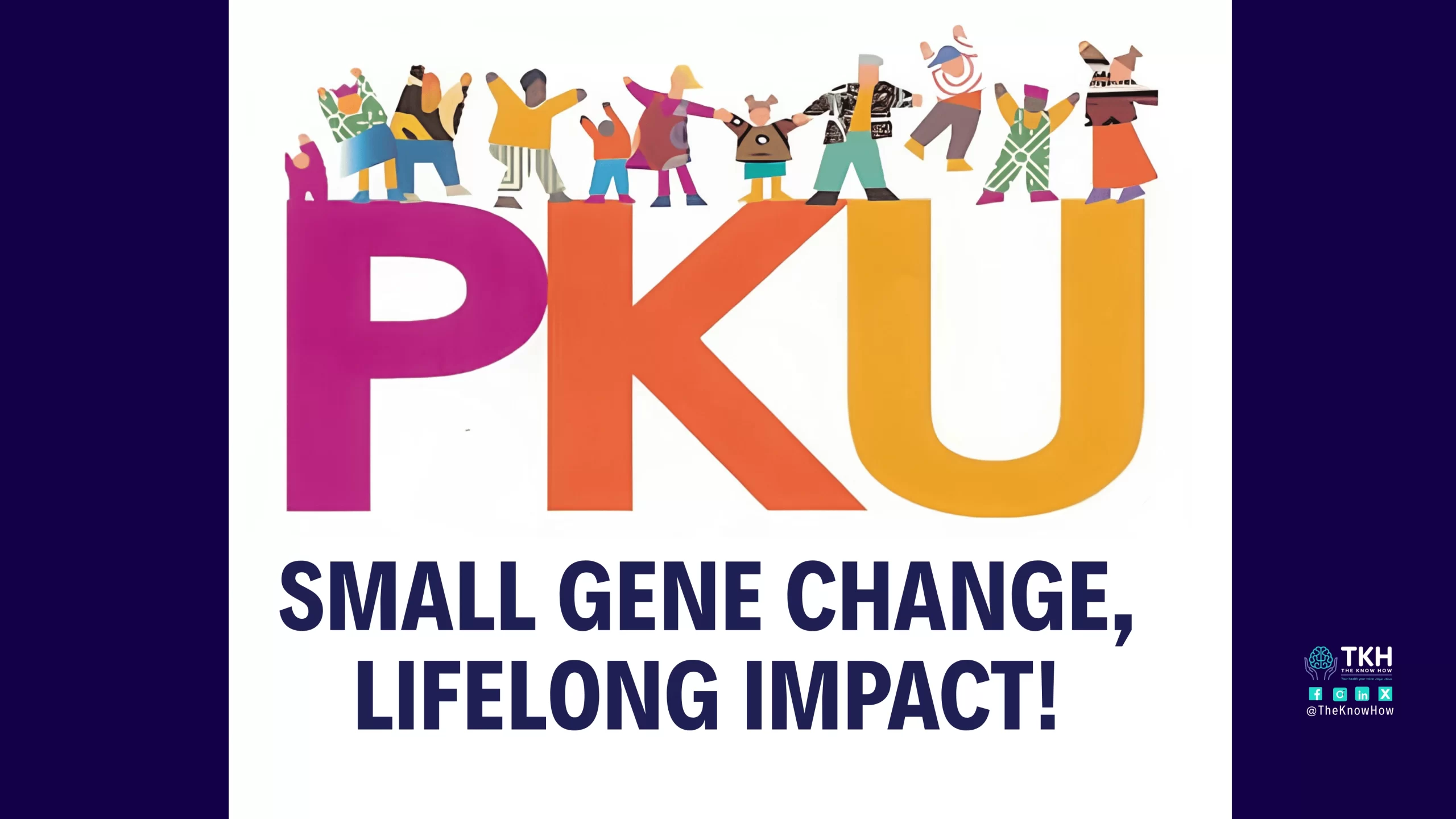
PKU International Awareness Day 2026—Breaking the silence on mental health in PKU
Living with a rare or chronic condition inevitably leaves a trace on a person’s mental well-being, and PKU is no exception. This year’s International PKU Day campaign ‘Traces of PKU’ is dedicated entirely to mental health.
What is PKU?
Phenylketonuria (PKU) is a rare, inherited metabolic condition defined by a lack of the enzyme phenylalanine hydroxylase (PAH). Because PKU is an inherited disorder, a genetic risk assessment and precision medicine evaluation can help families understand inheritance patterns, recurrence risk, and personalized long-term management strategies. The enzyme, responsible for transforming one of the essential building blocks of protein (an amino acid), into another (called tyrosine), is not sufficiently active in individuals with PKU. This leaves the amino acid phenylalanine (Phe), found in most protein-foods and some artificial sweeteners, building up to harmful levels in blood and brain.
A rare genetic disorder, PKU is inherited through autosomal recessive means. Families affected by inherited conditions may benefit from a hereditary disease evaluation through precision medicine, particularly when planning future pregnancies or assessing risks for other relatives. For a child to be born with PKU, both parents need to contribute one copy of the faulty PAH gene; simply having a single copy doesn’t pose a threat.
If PKU remains undetected, excessive quantities of phenylalanine can cause severe, irreversible intellectual impairment, as well as epilepsy, developmental problems, eczema, and a specific body odour. Fortunately, thanks to systematic newborn testing programs implemented in many wealthy nations, a diagnosis in many infants takes place within their first few days, before brain damage occurs, allowing treatment to begin without delay. Early diagnosis is only the first step, and a comprehensive medical assessment for inherited metabolic disorders can help determine baseline health, nutritional status, and ongoing monitoring needs.
How Common is PKU?
Although rare, PKU is more frequent than most believe. According to rough estimates, roughly in the United Arab Emirates, phenylketonuria (PKU) occurs in approximately 1 in every 12,000 to 14,000 births. PKU is one of the most common inherited metabolic disorders (errors in how the body processes food) in the UAE population. Because inherited metabolic disorders often affect entire families, a genetic risk assessment for inherited conditions may help identify relatives who could benefit from counseling or testing. although rates may fluctuate across geographic areas and ethnic groups. For example:
- Ireland actually has the highest rate in Europe, with about 1 out of every 4,500 births being affected by PKU.
- 1 out of every 10,000 to 15,000 newborns within the majority of European populations have the disorder
- The prevalence in the United States hovers between 1 out of every 10,000-25,000 newborns.
- It is especially common in Turkey (as high as 1 in 2,600 births) and related to elevated instances of consanguineous relationships (marriages between closely related individuals).
- In contrast, PKU is exceedingly uncommon among people from Africa or Southeast Asia. Globally, an estimated 13,500 individuals are currently afflicted with PKU in the U.S., and consanguinity is the most significant contributor to increased occurrences worldwide given its hereditary nature.
Types & Classification of PKU
Not all cases of PKU are identical; they exist on a spectrum ranging in severity, according to how well an individual’s residual enzyme functions and resultant phenylalanine blood level. The categories into which most individuals fall include:
- Classic PKU: The most severe form of the disorder
- Mild PKU
- Mild Hyperphenylalaninaemia (HPA)
Signs & Symptoms
Because many countries conduct universal newborn screening for the disorder, a large percentage of PKU individuals go undiagnosed during childhood. Nevertheless, the symptoms of an unrecognized, uncontrolled case of the illness can include:
Untreated or Subtly Managed PKU
- Profound intellectual handicap and delayed cognitive growth
- Frequent seizures
- Behavioral or psychiatric issues
- Small skull size (microcephaly)
- Eczema and other skin rashes
- Hypopigmentation (lighter complexion and hair due to decreased production of tyrosine)
- Musty or mouse-like body odor
Diagnosis
The first widespread infant screening program in the U.S. To screen for PKU and was rolled out in 1961, which is now a common procedure performed throughout industrialized countries today. During testing within 24 to 72 hours of birth using the heel prick blood test and tandem mass spectrometry, a doctor takes a sample of blood. If the amount of Phenylalanine is more than 120micromol/L in the blood, further assessment and blood analysis including mutation tests will be prescribed in addition to potentially genetic sequencing to see which variants of PAH are causing PKU; alternatively, in some cases they test for BH4 deficiencies, a rare alternative that has a much more differing course of treatment. Doctors continue testing the dried blood to assess phenylalanine levels as and when a child grows older with intervals that vary depending on a given person.
Treatment
Fortunately for those afflicted with PKU, in recent years there has been significant improvement in management strategies. A dietary management protocol aimed at controlling phenylalanine, and with current research findings, various medical treatment options exist to preserve cognitive functions through the individual’s lifetime. The approaches include:
- Dietary Management
- SapropterinDihydrochloride (BH4 Therapy)
- Sepiapterin
- Pegvaliase
- Large Neutral Amino Acids (LNAAs)
- Gene and mRNA Therapies (Under Research)
From Diagnosis to Hope: Supporting Individuals Living with PKU
For More Information About PKU:
https://rijetke-bolesti.com/en/medunarodni-dan-svjesnosti-o-fenilketonuriji/