One Health, One Action: Prevent AMR Now!
For World AMR Awareness Week 2026, a look at how bacteria become resistant to antibiotics, who is most at risk from multidrug-resistant organisms, what the UAE is doing about AMR, and simple steps you can take to prevent infections and protect antibiotics.
The World AMR Awareness Week (WAAW) is a global campaign to raise awareness and increase understanding of AMR and to promote global action to tackle the emergence and spread of drug-resistant pathogens. As one of WHO’s official health campaigns, WAAW is mandated by the World Health Assembly and is commemorated annually from 18 to 24 November. This year’s theme is “One Health, One Action: Prevent AMR Now”. It reminds us that the health of people, animals, plants, and the environment is closely connected, and that everyone has a role to play.
AMR is no longer a problem of the future. Bacterial AMR is already linked to more than 4.7 million deaths every year, and without urgent action it could cause up to 39 million deaths by 2050.
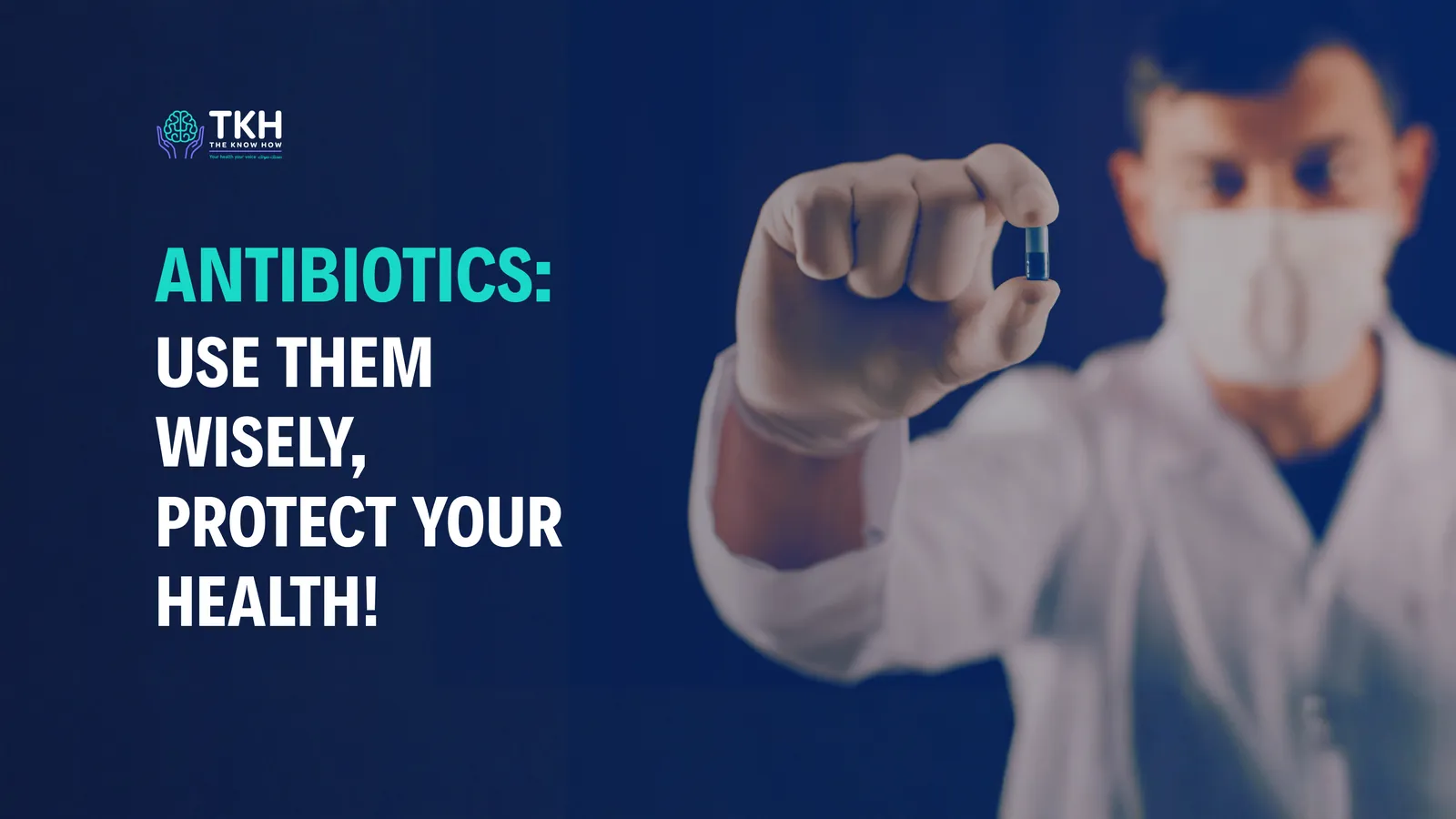
Antibiotics are medicines that inhibit bacterial growth or kill bacteria. However, bacteria can develop strategies to evade the antibiotic's mechanism of action, becoming resistant to antibiotics, a phenomenon termed antibiotic resistance in medical jargon. In such cases, most antibiotics become ineffective against these bacteria, which are then known as multidrug-resistant organisms (MDROs). The most well-known example is methicillin-resistant Staphylococcus aureus, or MRSA.
Antimicrobial resistance (AMR) extends beyond bacteria to include viruses, fungi, and parasites, which may also no longer respond to antimicrobial agents. Due to drug resistance, infections become difficult or impossible to treat, increasing the risk of disease spread, severe illness, and death.
What Causes a Bacterial Infection?
Some bacteria we only meet occasionally. In the Middle East, bacterial infections include brucellosis, tuberculosis, and salmonellosis. A rare but dangerous threat to small children is meningococcal meningitis.
But many bacteria we meet every day. They live with us and normally protect our health. Many bacteria naturally colonise our skin and the mucous membranes of our mouth, nose, intestines and other organs. Together, they form a protective barrier, making it harder for disease-causing organisms to enter our bodies.
When the immune system is weakened, or the skin and mucous membranes are damaged, both foreign organisms and the body’s own organisms can enter the body and trigger an infection. Common types of bacterial infections from usually harmless organisms on our skin and mucous membranes are pneumonia, infection of the urinary tract, and wound or skin infections.
When the bacteria spread in the bloodstream through the body, the term used is blood poisoning, or sepsis. In the worst case scenario, organ failure may occur. This can be life-threatening. Antibiotics are normally effective in treating bacterial infections. They kill or weaken the bacteria.
What is Antibiotic Resistance?
Antibiotics combat bacteria by killing them or by inhibiting their multiplication and growth. But bacteria can adapt and are survival artists. When they multiply very rapidly in large numbers, changes in their genetic makeup may occur. Some of these changes render the bacteria insensitive (=resistant) to antibiotics.
Antibiotic resistance mainly occurs when antibiotics are not used correctly:
- People take antibiotics too frequently, over too short a period or at too low a dose.
- People take antibiotics although they are not effective, for instance, to treat viral infections.
One in six laboratory-confirmed bacterial infections causing common infections in people worldwide in 2023 were resistant to antibiotic treatments, according to the WHO Global Antibiotic Resistance Surveillance Report 2025, published in October 2025. Between 2018 and 2023, antibiotic resistance rose in over 40% of the pathogen-antibiotic combinations monitored, with an average annual increase of 5 to 15%. The picture is more worrying in our part of the world: in the WHO Eastern Mediterranean and South-East Asia Regions, one in three reported infections was resistant.
Antibiotic resistance also occurs apart from its use in human medicine. Intensive livestock farming involves a lot of animals kept in close confinement and frequently requires the use of antibiotics. This encourages the emergence of resistant bacteria. They are spread with the animal feces often used for the nutritional enrichment of agricultural soils. Within the framework of the One Health approach, which recognizes the interconnectedness of human, animal, and environmental health, there is a growing concern for antibiotic resistance in farm waste and its dissemination risks.
What is Multi-Drug-Resistant Organism (MDRO)?
When bacteria are resistant to several antibiotics, the term multiresistance is used. In principle, these bacteria are no more dangerous than any others, nor do they trigger infections more frequently. However, once an infection develops, it is far harder to treat. Laboratory tests can determine which antibiotics can still help and which can’t. In the worst case, no effective antibiotic is left. Multidrug-resistant bacteria are formed particularly when antibiotics are not correctly administered, this means too often, too short or at an insufficient dose.
Who Gets Ill with Multi-Drug-Resistant Organisms?
Multidrug-resistant organisms are normally harmless for healthy individuals with a good immune system. This means the risk of disease on contact with these bacteria is usually very low. Healthy individuals may be carriers of multidrug-resistant organisms without becoming ill themselves and without knowing they are MDRO carriers. This becomes problematic when they unknowingly transmit these organisms to individuals with a weakened immune system who are particularly at risk of developing infections. That is why these patients are tested for MDRO or MRSA bacteria when they are admitted to hospital.
The following factors increase the risk of catching MDROs:
- Hospital stay during the previous 6 months
- Stay in a nursing home
- Need for permanent care
- Antibiotic treatment within the last 6 months
- Open, large, poorly healing skin wounds
- Tubes (catheters) in the body, for instance, in the bladder
- Diseases which weaken the immune system, for instance diabetes, hepatitis, HIV
- Medication that suppresses the immune system
For healthy MDRO carriers, the organisms can constitute a risk when they undergo surgery. The MDROs can enter the surgical wound and trigger an infection.
What Are Consequences of MDRO-Infections?
The more frequently antibiotics are prescribed and taken, the higher the risk of resistant bacteria developing and spreading. This can have serious consequences, particularly for small children, the elderly, or the sick:
- Infections last longer.
- Illnesses are more difficult to treat.
- Infections that had been easy to treat in the past may become life-threatening.
- For a few bacterial illnesses, there are scarcely any antibiotics that still work.
- Infected people need special antibiotics that may have more side effects.
- Hospital stays last longer and become more frequent.
- Patients have to be isolated more frequently from other people.
What Is the UAE Doing About AMR?
The UAE is acting too. The Ministry of Health and Prevention (MOHAP) and the Ministry of Climate Change and Environment have launched the UAE National Action Plan on AMR 2025 to 2031, which follows a One Health approach across human health, animal health, agriculture and the environment. Its priorities include public awareness and education, better infection prevention and control in healthcare facilities, and the careful use of antibiotics, known as antimicrobial stewardship.
In September 2026, MOHAP held the 9th UAE International Conference on Antimicrobial Resistance in Dubai. Experts discussed new antibiotics and diagnostics, stewardship, infection control and stronger surveillance.
What You Can Do Against Antibiotic Resistance
The best protection against infections is not to spread germs further. Good hygiene prevents infections, and every infection prevented is one less reason to take an antibiotic. WHO estimates that hand hygiene and other infection prevention measures can reduce infections acquired in healthcare settings by up to 70%. You, for instance, can help by doing the following:
- Regular and thorough washing of your hands with soap and water. This is because many germs are spread through direct contact with the hands. It is particularly important to wash your hands before eating, and after going to the toilet, changing nappies, contact with animals or handling raw meat.
- Always use paper tissues when blowing your nose and discard them safely in a bin immediately. If possible, wash your hands right away to avoid transferring germs to other people.
- If possible, don’t cough into your hand but into your sleeve. This keeps your hands clean. Keep your distance from other people when you cough.
- Try and stay home if you have an infectious illness. Avoid touching other people, for instance shaking hands.
- If your doctor prescribes antibiotics, take them as instructed. Don’t stop too early or use lower doses.
- Do not throw old or unused medicines into the toilet or washbasin. This burdens the environment and could contribute to the development of resistance. Return them instead to a pharmacy or a hospital take-back programme; for example, Dubai Health Authority pharmacies accept unused and expired medicines. If you are not sure where to go, ask your pharmacist.
- Towels, flannels and hygiene articles such as toothbrushes should be for your personal use only and changed regularly.
- Wash raw fruit and vegetables thoroughly. When preparing food, be sure to clean chopping boards and knives with washing-up liquid and water, especially when you are handling raw meat.
- In enclosed spaces, the number of germs in the air may increase. Air rooms several times a day for a few minutes.
- If skin is damaged, bacteria may penetrate. Cover wounds or injuries with a plaster or dressing.
- If you are healthy, you can have normal contact with MDRO carriers. You can also hug them. The risk of infection is extremely low. But be sure to wash your hands thoroughly afterwards.
If Antibiotics Don’t Work on Virus, Why Does Vaccination Reduce Antibiotic Resistance?
WHO estimates that vaccines against 23 disease-causing germs could reduce the use of antibiotics by 22%, which is about 2.5 billion daily doses every year. This includes vaccines already in use and new ones still being developed, for example, against tuberculosis, which would have the biggest impact.
This information comes from a World Health Organization (WHO) report on the subject, published in October 2024, which estimated the potential impact of increases in immunization rates. How vaccines aid in reducing antibiotic resistance has not been fully demonstrated so far. However, vaccines can “train” the immune system to better defend against various pathogens before an infection begins or worsens.
“Vaccinated people will have fewer infections and thus will also be protected against potential complications from secondary infections that may trigger the use of antibiotics or require hospital admission,” the report stated.
Therefore, make sure that you and your family have the recommended vaccinations. Remember to get the necessary booster inoculations.
What You Can Do This Week
- Wash your hands with soap and water, especially before eating and after going to the toilet.
- Take antibiotics only when your doctor prescribes them, exactly as instructed.
- Make sure you and your family are up to date with vaccinations.
- Return unused medicines to a pharmacy, and share this message with your family and friends.
If an infection does not get better, or you are unsure about your treatment plan, speaking to another doctor for a second medical opinion can give you clarity and peace of mind. Please never start or stop antibiotics on your own.
Your Health Matters
Sources
Risikoadaptiertes Screening auf methicillin-resistente Staphylococcus aureus
Frontiers | Antibiotic Resistance: One Health One World Outlook
Gulf News | Expired medicines at home? UAE health authorities issue warning
This article is for general health information and does not replace advice from your treating physician.