Your Mind Matters, Mental Health
Everyone has good and bad days, but some signs mean it is time to ask for help. Learn the common mental health warning signs, when to get immediate help, the UAE mental health helplines, and how to talk to a friend who is struggling.
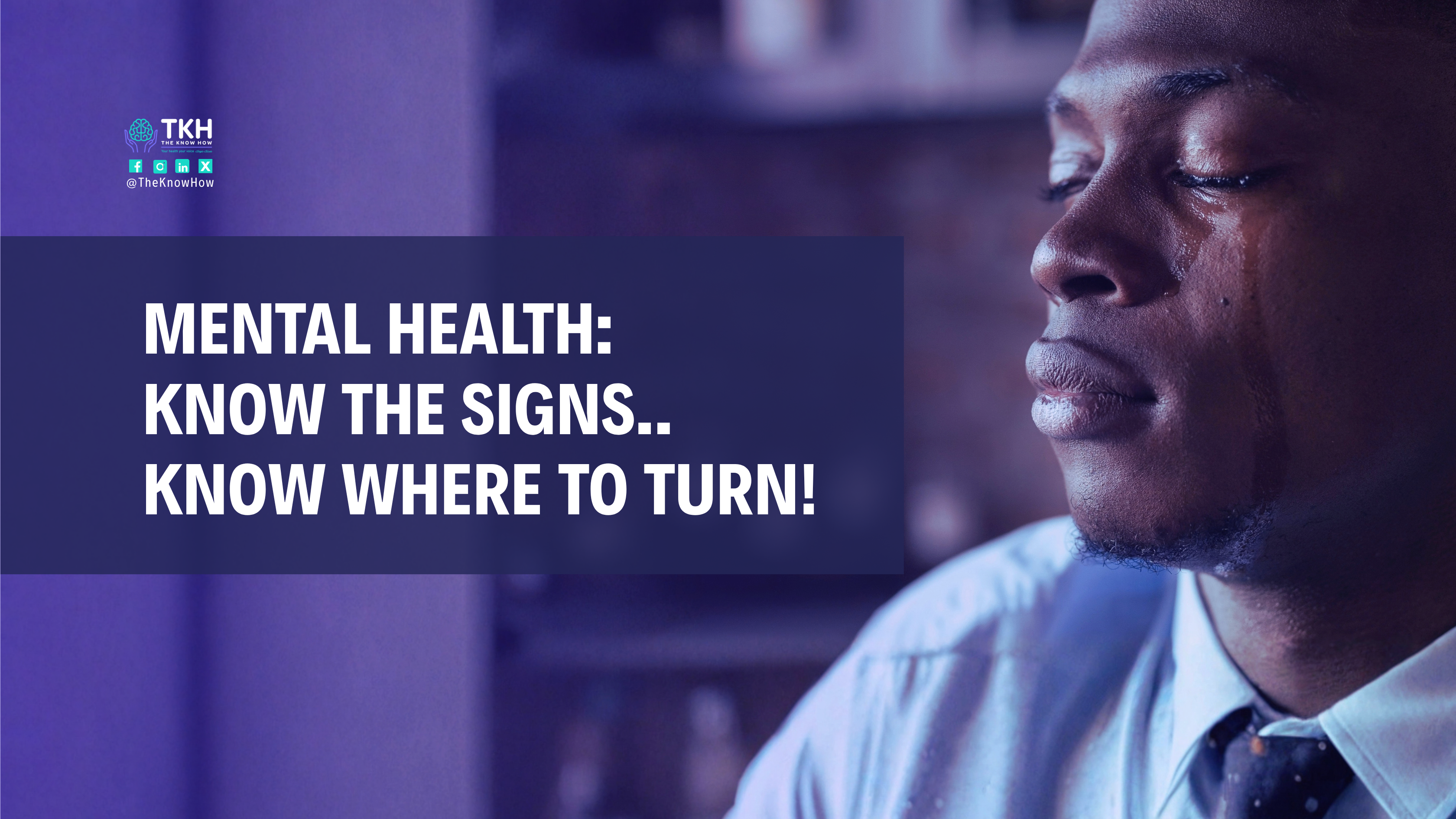
Dealing with uncertainty and life changes is part of our lives. Managing daily routines and activities are our usual tasks. However, sometimes daily challenges can be overwhelming, and coping with different emotions like stress and anxiety can burden people at various levels.
Therefore, it is very important to pay attention to the physical, mental, and emotional health of family, friends, colleagues, or other people close to you. While it is not always easy to determine a mental health issue, there are signs that could indicate a need to seek psychological support and professional help.
Find some tips below. More details are available at UNICEF Jordan.
Mental Health Warning Signs: When to Ask For Help
It is completely normal to experience both good and bad days. However, if certain warning signs persist for more than two weeks and last for most of the day, it is time to seek professional help.
Common Warning Signs:
- Persistent Low Mood: Feeling sad, down, or empty for more than two weeks.
- Loss of Interest: A noticeable decrease in interest or pleasure in daily activities and hobbies.
- Chronic Fatigue: Feeling as though all of your physical and emotional energy has been drained.
- Guilt and Worthlessness: Experiencing constant self-blame or feeling like a burden.
- High Anxiety: Feeling nervous, stressed, worried, or on edge all the time.
- Sleep Disturbances: Having trouble falling asleep, staying asleep, or experiencing interrupted rest.
- Changes in Appetite: Significant changes in eating patterns, such as losing your appetite or overeating.
- Cognitive Difficulties: Struggling to concentrate, make decisions, or remember things.
Symptoms Requiring Prompt Professional Advice:
Do not wait two weeks to seek help if you or someone you know experiences the following signs:
- Unexplained Fear: Sudden, intense panic attacks accompanied by a racing heart and breathing difficulties.
- Drastic Behavior Shifts: Severe mood swings that negatively impact daily activities and relationships with family or friends.
- Unhealthy Coping: Using alcohol, drugs, or medication to escape or cope with difficult feelings.
- Escapism: Frequently wishing to sleep continuously just to avoid reality or not wake up.
Mental Health Crisis: When to Get Immediate Help
Immediate Action Required:
An immediate crisis response is necessary when you or a person you know is:
- Feeling completely hopeless and thinking about or planning to end their life.
- If you or someone you know is in distress, suicidal, or experiencing a mental health crisis, call 800 1717
You do not have to struggle with difficult feelings alone. Contact your local helpline or a mental health professional to get the support you need as soon as possible to keep yourself safe.
The UAE National Mental Health Helpline is free, available 24 hours a day, 7 days a week, and multilingual (Arabic, English, and other languages). Trained crisis counsellors will provide immediate support and can arrange referrals.
- If in immediate danger, call 999
If a person is in immediate danger of harming themselves or others, call 999 (Police emergency number across UAE) immediately. Do not wait.
Emergency services can attend within minutes. You may also head to SKMC ER in Abu Dhabi or Al Ain Hospital ER in Al Ain, or to the nearest ER to you.
Keep in mind: Asking for help is a sign of strength, it shows self-awareness and courage to seek support during difficult times.
Key UAE National Helplines for Mental Health
You can access full details, legal protections, and strategy initiatives directly on The Official Platform of the UAE Government Mental Health Information Page.
- The Hope Hotline (Mental Support Line): Dial 800-4673 (800-HOPE). Available daily from 8:00 AM to 8:00 PM for free, confidential, initial psychological consultation and guidance. Support is accessible via both voice calls and WhatsApp.
- SAKINA Support Line: Dial 800-725462 (800-SAKINA). This is a free, confidential 24/7 hotline available nationwide to anyone experiencing acute stress, panic attacks, or emotional overwhelm. It is fully bilingual in Arabic and English.
- Istijaba Helpline: Dial 800-1717. This hotline connects callers directly to licensed mental health practitioners for psychological guidance, adaptive resilience skills, and stress relief.
Mental Health Warning Signs: How to Talk to a Friend?
How to support a friend struggling with their mental health (and avoid stereotypes)?
Honest communication is the backbone of any strong relationship. When a friend or loved one trusts you enough to share their mental health struggles, it can be tough to know what to say. You don't need to have all the answers or act as a professional therapist, simply being a genuine, compassionate listener is the best place to start.
It’s completely normal to feel a bit stuck or nervous about saying the wrong thing when someone opens up to you. To help you navigate these moments, here are a few gentle ways to steer the conversation and support someone dealing with depression or mental health challenges.
You can find more details on Mental Health UK.
Mental Health Problems: Conversation Starters
Here are a few gentle conversation starters to let them know they aren't alone:
How are you, really? Sometimes I feel a bit overwhelmed. Is it the same for you?
I am checking in as you’ve been on my mind lately. I hope everything is okay? Let’s talk when you have time, I’d love to catch up!
What a strange time, right? How are you holding up?
We haven’t had a chance to talk for quite a while. I am wondering how you are doing, really. Let’s have a chat.
Set the Right Environment for Mental Health Discussions
Choose a low-pressure setting: Intense, face-to-face eye contact can feel intimidating. Professional support groups suggest talking while doing a casual activity together, like walking, cooking, or driving.
Eliminate distractions: Ensure you are in a quiet, private space where you will not be interrupted, and put your phone away to show they have your full attention.
Use Non-Judgmental "I" Statements in Mental Health Discussions
Focus on objective observations: Avoid accusatory language like "You have been acting weird" or "Why are you staying home so much?"
Frame it around your care for them: Speaking from your own perspective can minimize defensiveness. Example: "I care about you, and you haven’t seemed quite like yourself lately for me. Am I wrong? How are you feeling today?"
Do’s and Don’ts Talking in Mental Health Discussions
While you are having the conversation, some words might come off a bit too strong to someone who is experiencing a mental health difficulty. Here are some suggestions to what words to use and what to avoid.
| What not to say… | What to say instead… |
|---|---|
| “You are overthinking.” | “What’s making you feel this way?” |
| “You worry too much…” | “I understand why you would feel this way.” |
| "You just need to get out more." | "What can I do right now to make things a little easier for you?" |
| "Don't worry, everyone gets sad." | "I hear you, and it makes complete sense that you feel overwhelmed." |
| "Why didn't you tell me sooner?" | "Thank you for trusting me with this. You don't have to go through it alone." |
Practice Active Listening in Mental Health Discussions
Ask open-ended questions: Use questions starting with "how," "what," or "when" (e.g., "What does that feel like for you?") rather than questions that lead to a simple "yes" or "no".
Avoid offering immediate advice: Your job as a friend is to listen, not to act as a therapist. Avoid dismissive "silver-lining" phrases like "Look on the bright side" or "You'll get over it."
Validate their reality: Reflect back what they say to confirm you understand. Try saying: "That sounds incredibly exhausting, and I'm really glad you're telling me."
Direct to Professional Resources in Case of Mental Health Issues
Offer collaborative help: Don't force them to see a doctor right away, but let them know professional support is an option.
Keep it actionable and low-stress: Ask for permission before overwhelming them with links and tips. You can say, "Would it be helpful if I looked up a few local counselors or sat with you while you call a support hotline?"
Know your limits: Recognize that you cannot be their sole support system. Protect your own emotional boundaries so you don't burn out.
Mental Health: A First Step Towards Healing
Opening up about mental health is a powerful first step toward healing. Seeking help is never a sign of weakness, it is a profound sign of strength.
While the journey to recovery has many steps, mental health challenges are highly treatable. Change is possible, and it all begins with the courage to take that very first step and reach out.
Your Mental Health Matters!
You want to read more about Mental Health? Follow our Blogs on Mental Health.
DISCLAIMER: This information is for general knowledge, should not be taken as medical advice, and you should consult with a healthcare provider if you have health issues.
This article is for general health information and does not replace advice from your treating physician.