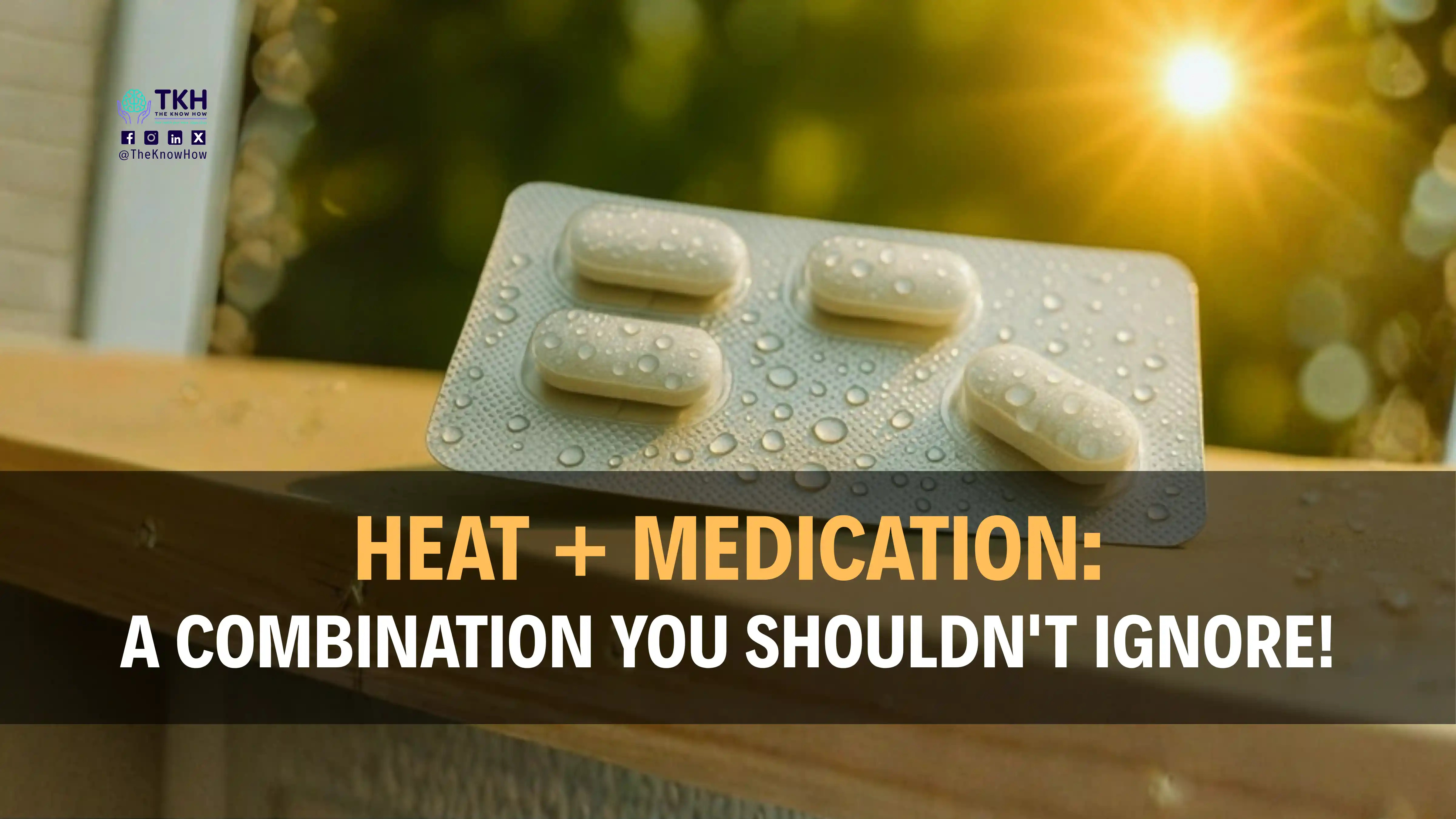
Could Your Medication Put You at Greater Risk in the Heat?
Every year, as temperatures soar across the UAE and beyond, millions of people taking regular medications face an invisible challenge: heat doesn’t just affect your body—it affects how your medications work. On a sweltering afternoon, the aspirin in your medicine cabinet and the diuretic you take for blood pressure become less predictable and less safe. Yet most patients never hear about it.
The conversation around medications and heat remains surprisingly quiet, even as global temperatures climb and heat-related health emergencies become more common. But for anyone managing a chronic condition—whether hypertension, diabetes, depression, or heart disease—understanding this interaction isn’t just helpful. It could be lifesaving
How Heat Sabotages Your Medications (And Your Body’s Response to Them)
The interaction between heat and medication works through several overlapping mechanisms—some direct, some invisible until it’s too late.
Interference with your body’s cooling system:
Dehydration and blood pressure drops:
Drug toxicity:
Medication storage and delivery:
Sun sensitivity:
Who’s Most at Risk?
- Patients on multiple medications, particularly combinations like ACE inhibitors plus diuretics, where the risks amplify through different mechanisms
- Older adults, whose bodies are less efficient at regulating temperature and who are more likely to take multiple medications
- People with heart disease, hypertension, or kidney disease, where medication interactions with heat directly threaten vital organs
- Patients taking psychiatric medications (antipsychotics, lithium, antidepressants), which commonly interfere with thermoregulation
- Those on diuretics or NSAIDs, which accelerate dehydration and kidney stress when heat increases fluid loss
- Patients taking stimulants (for ADHD or other conditions), which can raise body temperature and impair heat perception
A Comprehensive Medical Assessment: The First Step The good news:
Heat-medication interactions are preventable with proper planning and awareness. Medication regimens can be reviewed with patients, with consideration to their risk profiles related to heat and consideration to making a plan with patients for medication management on hot days and for when to seek medical care. This starts with a comprehensive medical assessment tailored to your specific situation. A thorough evaluation should include:
- A complete medication inventory—including over-the-counter drugs, supplements, and herbal remedies you might not think of as “medications”
- An assessment of your heat exposure—how much time you spend outdoors, in airconditioned environments, and during peak heat hours
- Your kidney and liver function— measured through blood tests, since these organs determine how efficiently your body clears drugs
- Your personal risk factors— age, existing health conditions, family history, and lifestyle habits like caffeine or alcohol consumption
This assessment isn’t a one-time box-check. As seasons change and medications evolve, so should your heat-medication plan.
What Healthcare Providers Should Do — And What You Should Ask
Clinicians can review patient medication lists with them, highlighting medications that may need to be adjusted because of interactions with heat, especially important for patients, including older patients, who take multiple medications that may amplify risks of harm from heat via different mechanisms.
As a patient, you should expect your doctor to:
- Review your medication list specifically for heat interactions before summer arrives
- Discuss a plan for medication adjustments during hot weather (does your dose stay the same, or might your doctor recommend a change?)
- Clarify when to seek medical care—what symptoms demand urgent attention, versus what can wait until your next appointment
- Provide guidance on storage — where to keep medications to prevent heat degradation, especially insulin and inhalers
- Address hydration strategy—how much you should drink, whether fluid restrictions (sometimes advised for certain heart or kidney conditions) need adjustment during heat
- Document any changes so you have them in writing and can reference them.
The Second Medical Opinion Advantage
If you’re on multiple medications—especially the riskier combinations—or if you have questions about your heart-medication plan, a second medical opinion can provide valuable clarity.
A second opinion isn’t about doubting your current doctor. It’s about ensuring you’ve explored every angle of a complex, personalized question: How do my specific medications interact with my body and my climate? Different specialists may weigh the risks of staying on a medication versus switching differently or may be more familiar with heat-tolerant alternatives or timing strategies.
This Summer, Make Heat-Medication Safety Part of your plan.
Whether you’re managing a chronic condition in the UAE’s intense heat, visiting during summer, or traveling to a hot climate, your medications don’t automatically adapt to temperature. You have to do the thinking for them.
Comprehensive medical assessment, precision medicine principles, and a collaborative second opinion when needed are all tools you have access to. Use them. Your lungs, heart, kidneys, and brain depend on medications working as intended—and your medications depend on you understanding how heat changes the equation.
This summer, before temperatures peak, before symptoms emerge, make an appointment. Ask the questions. Create a plan. Document it. Your body. Your medications. You have a right to safe, informed care—even in the heat. A contribution by The KnowHow and Where Medical Clarity Becomes a Reality.
For additional information yo can visit:
Our previous blog:
https://theknowhow.ae/what-happens-to-our-medicines-in-the-summer-heat/
Or the following website: