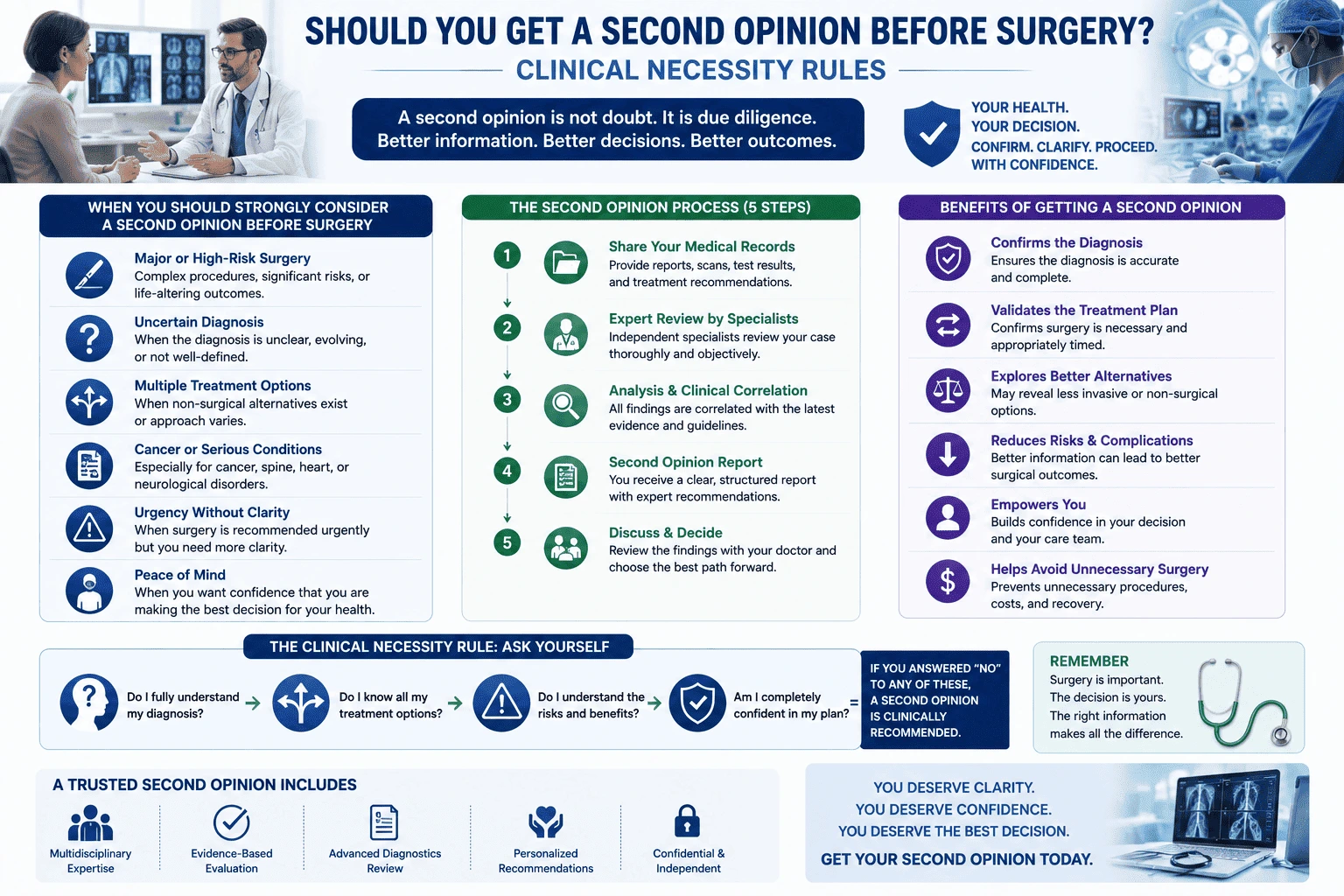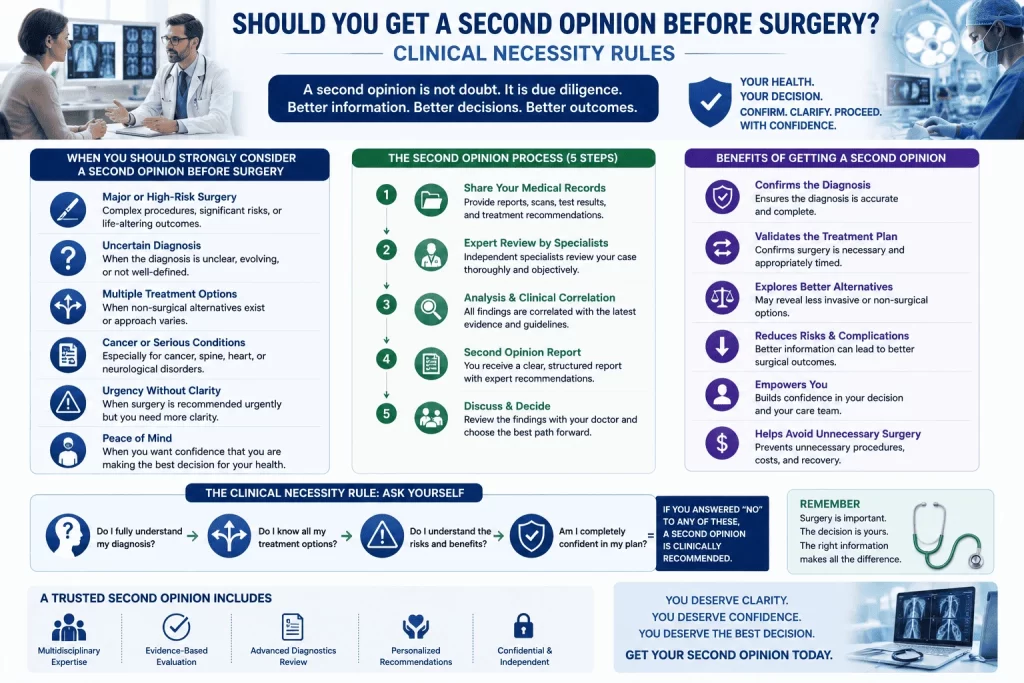
When a surgeon looks at a diagnostic scan and concludes that an operation is the optimal path forward, the clinical timeline often accelerates rapidly. The patient is frequently swept into a workflow of pre-operative clearances, scheduling logistics, and surgical consent forms. In this high-velocity environment, pausing to ask for an independent secondary review can feel like a disruption. However, clinical data repeatedly confirms that seeking a secondary perspective is one of the most critical risk-mitigation steps a patient can take.
Surgery, by its very nature, introduces anatomical disruption, anesthetic risks, and irreversible physiological changes. In modern, evidence-based healthcare systems, obtaining a secondary evaluation before committing to an operation is not an expression of panic; it is a vital quality-assurance protocol designed to confirm that surgery is truly your best option.
The Realities of Surgical Variance: Why Specialists Disagree
Many patients assume that surgical recommendations are based on rigid, binary rules. In reality, surgical decision-making is heavily influenced by a specialist’s personal training, their institutional culture, and their individual clinical experiences. This variance often explains why two highly qualified surgeons can look at the exact same imaging file and propose completely different treatment paths.
Preference-Sensitive Procedures: The Grey Area of Operative Care
A significant portion of modern surgeries fall into a category known as “preference-sensitive care.” This means that for a given condition, multiple medically valid treatment options exist, ranging from aggressive surgical intervention to conservative, non-invasive management. When a patient navigates these complex diagnostic crossroads, utilizing a dedicated Second Medical Opinion UAE platform ensures that independent sub-specialists re-evaluate the raw diagnostic files. This confirms whether an invasive path is genuinely superior to non-surgical alternatives before any commitments are made.
The Power of Alternative, Non-Invasive Protocols
Medical science evolves at an exceptional pace. New clinical trials frequently show that specialized physical therapies, targeted pharmaceutical regimens, or minimally invasive interventional radiology procedures can match or exceed the long-term outcomes of major surgeries. An independent expert who does not perform surgeries directly can often provide an objective, unbiased look at these emerging non-operative paths.
High-Priority Procedures That Require Immediate Secondary Validation
While any elective operation benefits from an independent review, clinical tracking data shows that certain specialties have significantly higher rates of diagnostic and therapeutic disagreement.
Spinal and Neuro-Surgical Recommendations
Spinal surgeries—such as laminectomies, discectomies, and multi-level spinal fusions—are among the most frequently modified surgical plans globally. Issues like degenerative disc disease and spinal stenosis often look alarming on an MRI scan, yet the physical structure visible on the image does not always match the patient’s actual functional symptoms. Independent spinal reviews often reveal that a patient’s pain can be successfully managed through structured core stabilization and advanced pain management protocols, completely avoiding the permanent structural changes of a fusion surgery.
Elective Orthopedic Reconstructions and Joint Care
Total hip, knee, and shoulder replacements are life-altering surgeries that carry extensive rehabilitation timelines. Before agreeing to an implant, it is crucial to verify that all joint-preserving strategies, localized regenerative therapies, and advanced biomechanical offloading protocols have been systematically exhausted.
Cardiac Interventions and Complex Vascular Structural Repair
Decisions surrounding stable coronary artery disease—such as choosing between an aggressive surgical coronary artery bypass graft (CABG) versus conservative, high-tier medical management and lifestyle changes—remain highly variable. A secondary look from an independent interventional cardiologist ensures the recommended approach aligns with the latest global consensus metrics.
Statistical Shift: How Second Looks Alter the Operative Plan
The tangible value of obtaining a second look before surgery is supported by substantial clinical data from major global health institutions.
| Surgical Specialty | Rate of Diagnostic/Plan Modification | Most Common Secondary Recommendation | Long-Term Patient Dividend |
| Spine & Neurosurgery | 30% to 40% | Extended conservative physical therapy or targeted injection blocks. | Avoidance of “failed back surgery syndrome” and preservation of natural biomechanics. |
| Elective Orthopedics | 20% to 25% | Structured physical rehabilitation, weight management, or arthroscopic options. | Delays or eliminates the need for total joint implants, preserving native bone tissue. |
| General Gynecology | 15% to 20% | Minimally invasive laparoscopic options or targeted hormonal management. | Lower incidence of radical removals (e.g., hysterectomies) for benign conditions. |
Managing the Pre-Surgical Strategy: De-risking via Systematic Screenings
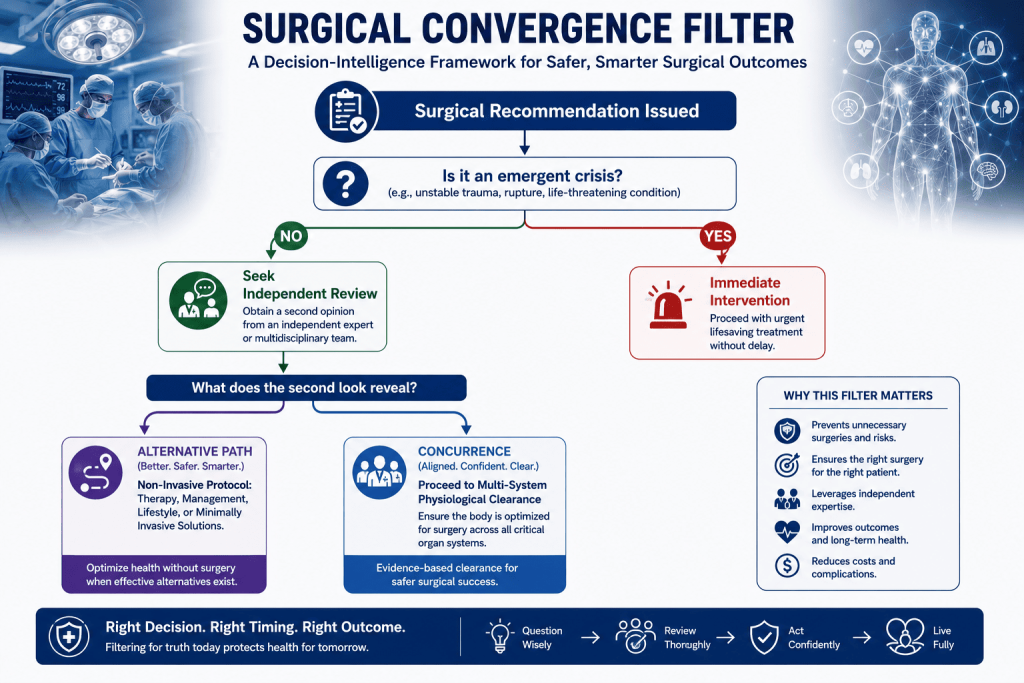
If an independent second look confirms that an operation is indeed the most appropriate path forward, your defensive strategy shifts from verification to optimization. Proceeding with an operation requires a precise understanding of how your entire body will respond to the stress of anesthesia and tissue repair.
Rather than relying on basic, rushed pre-operative blood tests, undergoing a comprehensive suite of Medical Assessments UAE provides a detailed, multi-system look at your health. By independently analyzing your pulmonary reserve, cardiac stability, and metabolic readiness, these comprehensive evaluations minimize post-operative complications and give your surgical team a clear, data-driven map to manage your recovery smoothly.
Navigating the Consultation: Questions to Ask the Secondary Expert
To maximize the clinical value of your secondary evaluation, you should treat the consultation as an objective, structural analysis of your condition. Use these precise clinical questions to guide your discussion with the specialist:
“What are the absolute, definitive clinical indications that make this surgery necessary right now versus waiting or trying other options?”
“What is the expected natural progression of my condition if I choose to delay or entirely decline this surgical procedure?”
“What specific objective outcomes—such as pain reduction percentages or mobility metrics—can I realistically expect from this operation, and for how long will those benefits last?”
“What is your personal complication rate for this specific surgical technique, and what are our contingency plans if the procedure does not yield the desired results?”
The Collaborative Outcome: Proceeding with Absolute Certainty
Seeking a secondary surgical review should never be viewed as a stressful delay or an awkward confrontation with your current doctor. Experienced, highly capable surgeons respect patients who take an active role in their care.
If the secondary specialist agrees with the primary recommendation, you can move forward into the operating theater with complete peace of mind, knowing your choice has been thoroughly vetted. If the second look reveals a safer, non-invasive alternative, you open the door to achieving a full recovery without the systemic stress, downtime, and permanent risks of a major operation.