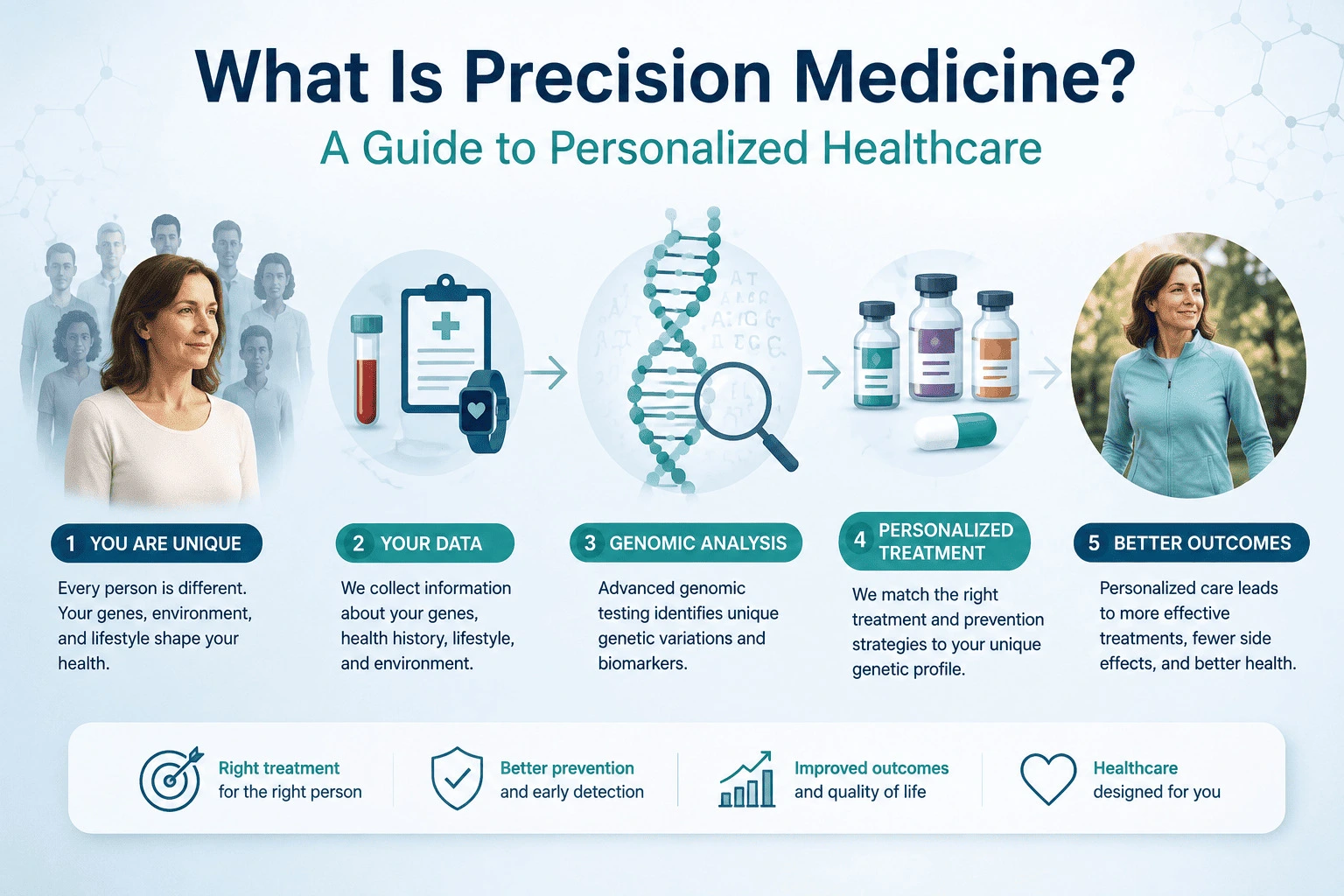
Imagine walking into a shoe store, and instead of asking for your specific size, the clerk hands you a standard, average-sized shoe and says, “This is what we give everyone; it should work well enough.” For some, it might fit passably. For many others, it will pinch, cause pain, or fail to support them entirely.
For generations, global healthcare has operated on a remarkably similar “one-size-fits-all” model. When ten individuals are diagnosed with the exact same condition, they are frequently prescribed the exact same medication at the exact same dosage. Yet, because our internal biology is incredibly distinct, some patients heal rapidly, others experience zero clinical improvement, and a few suffer severe side effects.
This conventional, trial-and-error approach is rapidly becoming obsolete. The catalyst for this transformation is precision medicine—a revolutionary shift in healthcare that replaces broad medical guesswork with hyper-personalized, data-driven clarity.
The Core Philosophy: Shifting from General Guidelines to Individual Biology
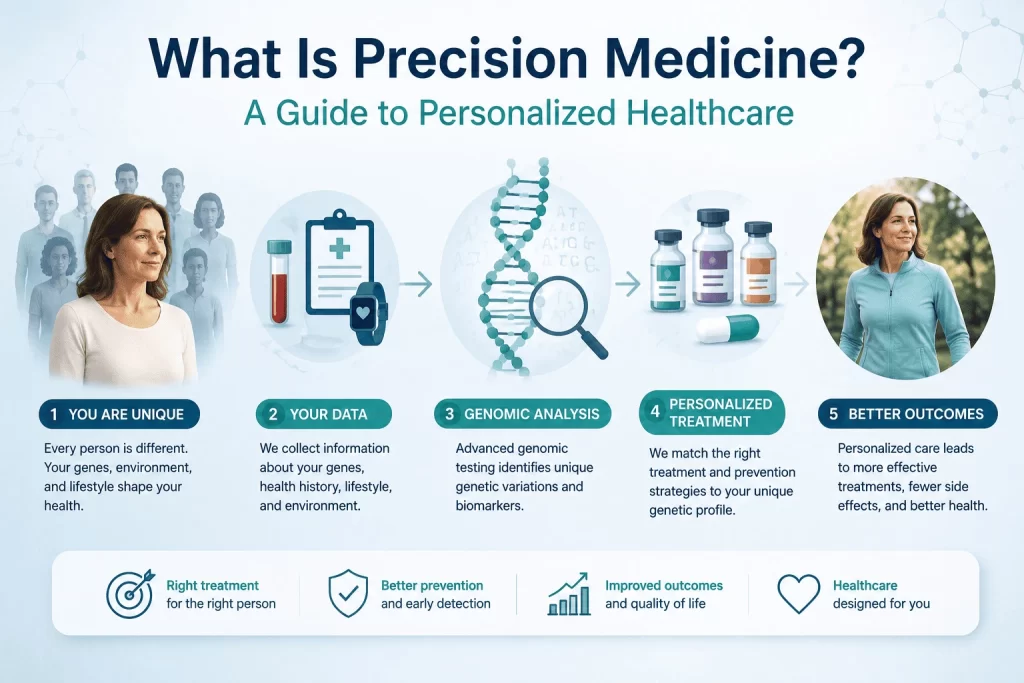
Imagine walking into a shoe store, and instead of asking for your specific size, the clerk hands you a standard, average-sized shoe and says, “This is what we give everyone; it should work well enough.” For some, it might fit passably. For many others, it will pinch, cause pain, or fail to support them entirely.
For generations, global healthcare has operated on a remarkably similar “one-size-fits-all” model. When ten individuals are diagnosed with the exact same condition, they are frequently prescribed the exact same medication at the exact same dosage. Yet, because our internal biology is incredibly distinct, some patients heal rapidly, others experience zero clinical improvement, and a few suffer severe side effects.
This conventional, trial-and-error approach is rapidly becoming obsolete. The catalyst for this transformation is precision medicine—a revolutionary shift in healthcare that replaces broad medical guesswork with hyper-personalized, data-driven clarity.
The Core Philosophy: Shifting from General Guidelines to Individual Biology
At its heart, precision medicine is an innovative approach to disease prevention and treatment that takes into account the specific genetic, environmental, and lifestyle factors unique to each individual. Rather than designing therapies based on the statistical “average patient” from historic clinical trials, this medical discipline analyzes your deep biological data to deliver the right treatment to the right person at the absolute right time.
To understand why this matters, we must look at our cellular architecture. Your DNA contains a highly specific sequence of over three billion chemical base pairs. This genetic code serves as the operational manual for your entire body, dictating how you fight off infections, process nutrients, clear out cellular waste, and metabolize pharmaceutical compounds.
When conventional medicine treats an illness, it often focuses purely on the outward symptoms. Precision healthcare, by contrast, looks deeply beneath the surface to examine the underlying molecular mechanics driving those symptoms. By understanding your specific biological profile, physicians can predict your risk of developing specific conditions years before they manifest, intercept diseases at a cellular level, and craft treatments that work in perfect harmony with your body.
The Pillars of Precision Healthcare: How It Works
Precision medicine isn’t a single test; it is an integrated clinical framework powered by several advanced diagnostic innovations.
1. Genomic Sequencing and Molecular Mapping
By analyzing a simple blood sample or saliva swab using Next-Generation Sequencing (NGS), specialists can map out your entire genetic code or look at highly specific panels of genes. This process identifies variations or mutations that may make you more susceptible to specific health conditions, allowing for highly targeted preventive strategies.
2. Biomarker Identification
Biomarkers are biological molecules—such as specific proteins, hormones, or metabolic waste products—found in your blood, tissues, or bodily fluids that signal whether a process inside your body is normal or abnormal. Mapping these indicators gives doctors a real-time, objective window into your precise physiological status.
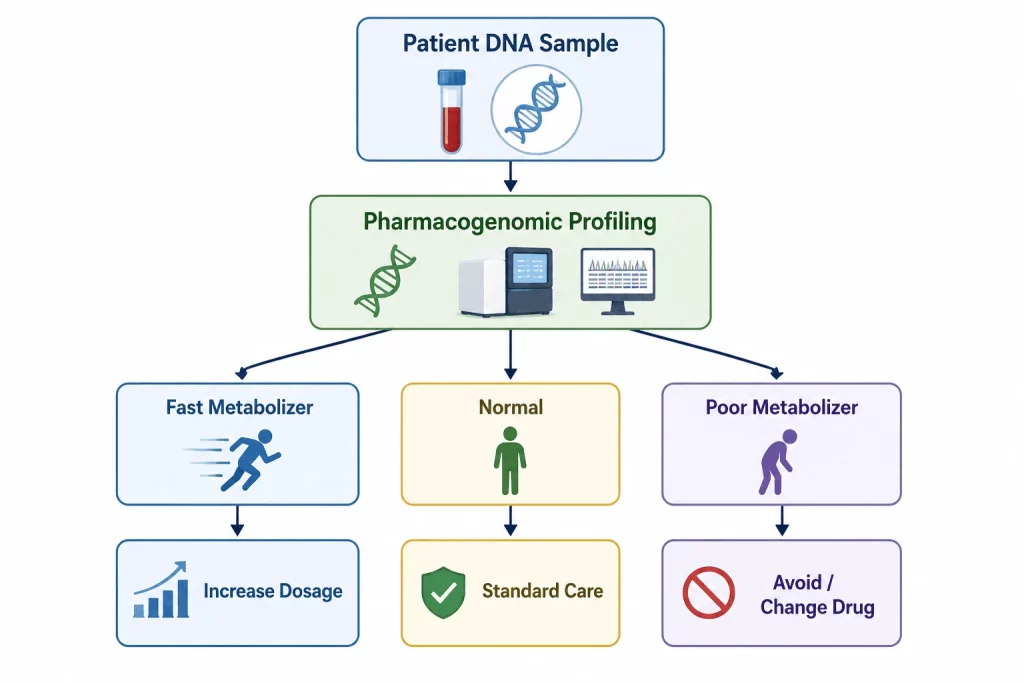
3. Pharmacogenomics (The Science of Drug Matching)
Have you ever wondered why a standard painkiller or blood pressure medication works wonders for a friend but does absolutely nothing for you? The answer lies in your liver enzymes, which are controlled by your genes. Pharmacogenomics studies how your unique genetic makeup affects your response to drugs. By testing your profile beforehand, doctors can know with absolute certainty which medications will be highly effective, which will be completely useless, and which might cause toxic side effects, completely eliminating dangerous therapeutic experimentation.
Real-World Applications: Precision Medicine in Action
The practical clinical impact of this personalized approach is reshaping several key areas of modern medicine.
Transforming Oncology
Nowhere is personalized care more disruptive than in the fight against cancer. Historically, cancers were classified entirely by where they grew in the body—such as lung cancer, breast cancer, or colon cancer. Today, we know that two tumors located in the exact same organ can be driven by completely different genetic mutations.
Through molecular diagnostics, oncologists can sequence the tumor’s DNA to pinpoint the exact genetic glitch driving its growth. Instead of relying solely on broad, systemic chemotherapy that damages healthy cells alongside cancerous ones, doctors can use targeted molecular therapies. These advanced medications act like guided missiles, latching onto and shutting down the specific mutated proteins keeping the tumor alive, resulting in vastly superior survival rates with minimal side effects.
Managing Chronic Cardiovascular and Metabolic Conditions
For chronic illnesses like type 2 diabetes, hypertension, and advanced lipid disorders, precision care moves the needle from management to true resolution. By analyzing your unique metabolic pathways and genetic predispositions, physicians can pinpoint the exact root causes of insulin resistance or arterial plaque accumulation, allowing for customized nutritional, lifestyle, and pharmaceutical interventions tailored precisely to your cellular biology.
Cracking the Code on Rare and Undiagnosed Conditions
For individuals living with rare, complex, or multi-system illnesses, the path to a correct diagnosis can take years. By utilizing whole-genome sequencing, precision specialists can compare a patient’s genetic sequence against massive global clinical databases, instantly identifying rare genetic variations and bringing an end to painful, exhausting diagnostic dead-ends.
The Proactive Shift: Advanced Medical Assessments vs. Reactive Treatment
The old model of healthcare is fundamentally reactive: you wait until you feel sick, you schedule an appointment, and you treat the damage that has already occurred. True long-term vitality, however, requires a complete shift from reactive treating to proactive preventing.
To achieve this level of foresight, individuals are increasingly turning to advanced Medical Assessments UAE. These are not your standard annual checkups. These comprehensive, data-dense evaluations integrate deep biomarker panels, advanced metabolic tracking, and early genetic screening to establish a pristine baseline of your current health. By identifying subtle cellular imbalances, sub-clinical inflammation, or hidden genetic risks before any physical symptoms emerge, these detailed health assessments provide an actionable roadmap to optimize your vitality and extend your healthy lifespan.
When to Seek a Specialized Review: Navigating Complex Diagnoses
If you or a loved one are currently managing a serious, life-altering diagnosis, navigating the sheer volume of treatment options can feel overwhelming. In high-stakes situations, relying on standard, generalized protocols can sometimes mean missing out on cutting-edge clinical pathways.
This is why obtaining an independent Second Medical Opinion UAE is such an invaluable step in the modern patient journey. When you face an intricate or ambiguous diagnosis, having your medical history, imaging, and pathology data reviewed by an independent expert through a modern, personalized lens can change everything. A secondary review can cross-reference your initial charts with the absolute frontier of targeted clinical developments, verifying that your treatment path is accurate, highly optimized, and tailored safely to your specific biological needs.
The Future is Local: Accessing Targeted Healthcare in the UAE
The United Arab Emirates has established itself as an innovative global hub for medical advancement, driven by visionary state-level initiatives like the Emirati Genome Program. This rapid scientific expansion means that world-class genomic diagnostics and custom tailored care strategies are no longer a distant future concept—they are fully accessible today.
Choosing to step into Precision Medicine UAE means partnering with an advanced, forward-thinking network that combines state-of-the-art sequencing technology with deep clinical expertise. The real-world process is entirely patient-centric, streamlined, and profoundly illuminating:
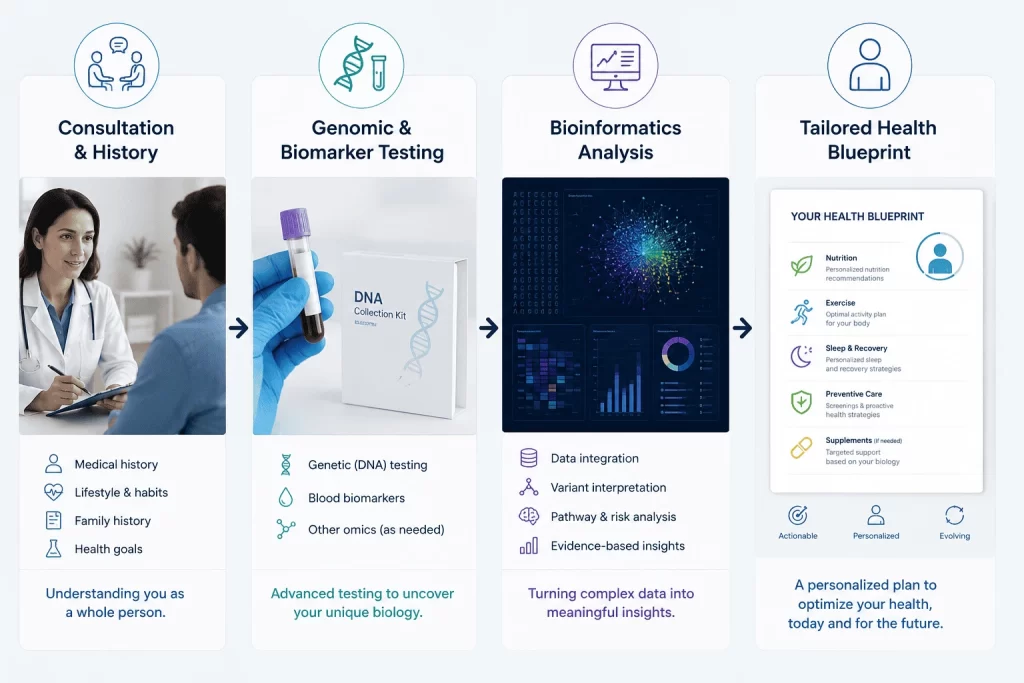
It begins with a thorough medical review, followed by advanced, non-invasive biomarker and genetic sampling. Specialized bioinformatic platforms then parse this raw molecular data, translating millions of data points into a clear, structured blueprint of your body. From there, expert clinicians craft your highly individualized care, optimization, or preventative strategy.
Ultimately, precision medicine represents the ultimate realization of patient-centric care. It respects and honors your unique individuality, using the absolute peak of modern human ingenuity to move you past generalized assumptions and into an era of absolute biological certainty.