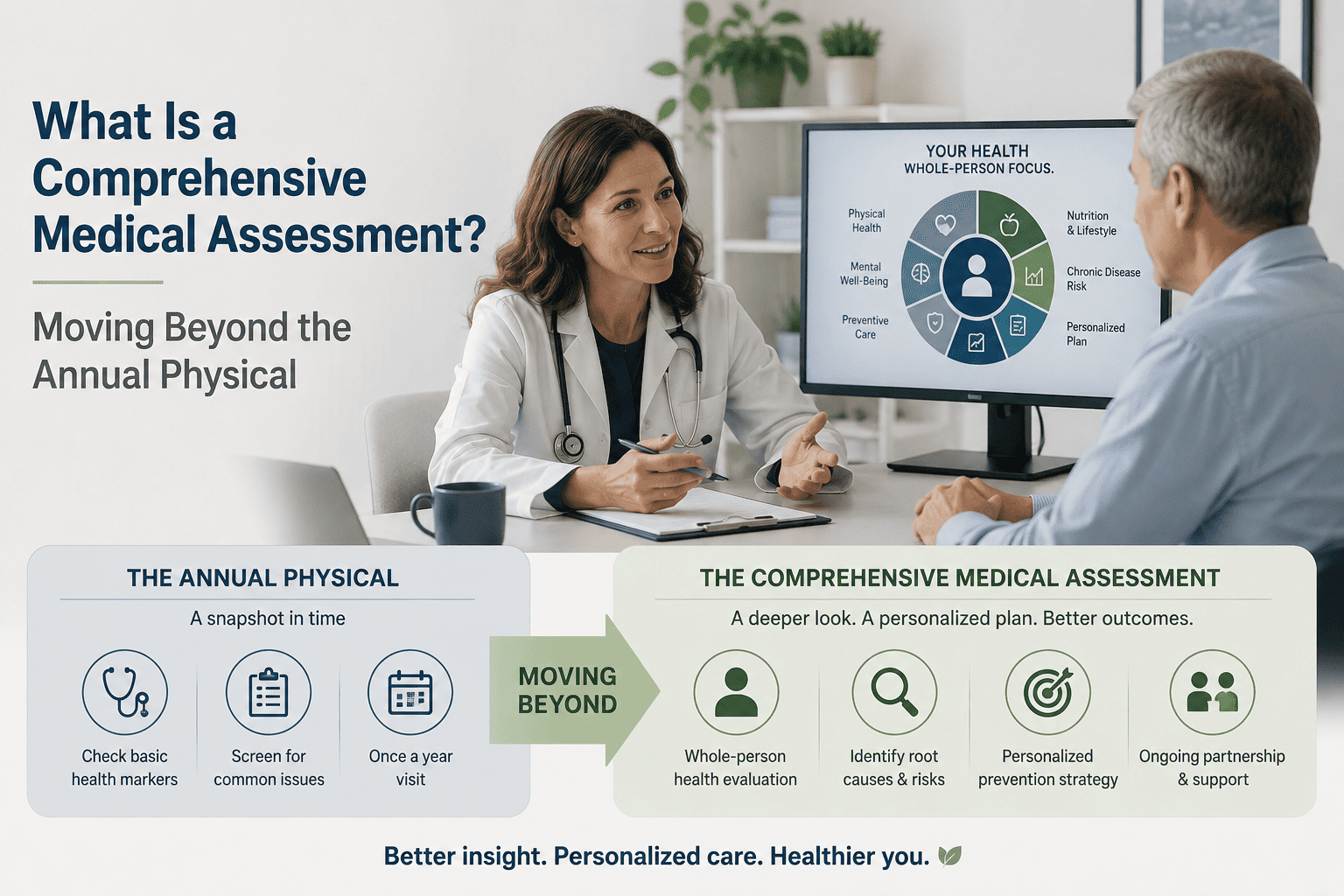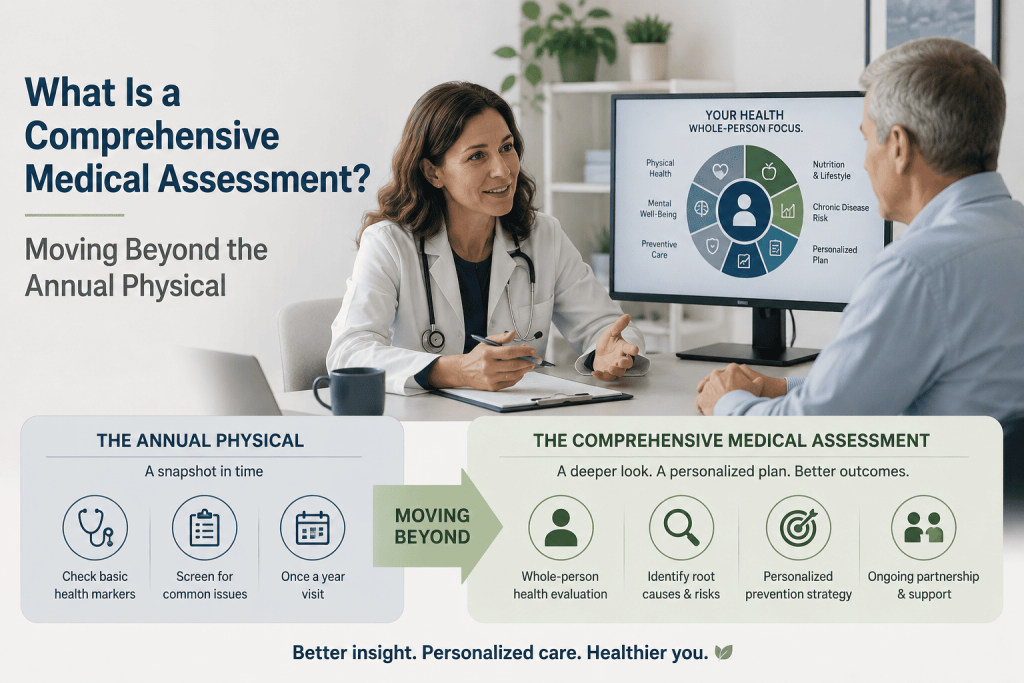
For most people, a standard doctor’s visit is a quick, reactive experience. You schedule an appointment because you feel unwell, or you undergo a basic 15-minute annual physical that checks your blood pressure, listens to your heart, and runs a standard, high-level blood panel. While these routine checkups are fine for managing basic health needs, they are not designed to uncover hidden, asymptomatic chronic diseases or optimize your long-term physical performance.
A comprehensive medical assessment is a completely different approach to healthcare. It is a highly deep-data, proactive health audit that combines advanced multi-specialty diagnostics, cutting-edge imaging, deep biomarker screenings, and genetic analysis into a single evaluation. Instead of waiting for symptoms to appear, a comprehensive assessment establishes an exhaustive data baseline, allowing specialists to catch potential issues years before they turn into clinical conditions.
The Core Architecture: Components of an Advanced Health Audit
A comprehensive evaluation brings together tools from multiple medical fields—such as cardiology, endocrinology, radiology, and sports medicine—to build an accurate picture of your internal health.
Next-Generation Blood Panels: Looking Beneath the Surface
Standard blood tests usually look at basic markers like total cholesterol, fasting blood glucose, and standard kidney function. Unfortunately, these high-level metrics can often return normal results even when metabolic or cardiovascular disease is actively developing.
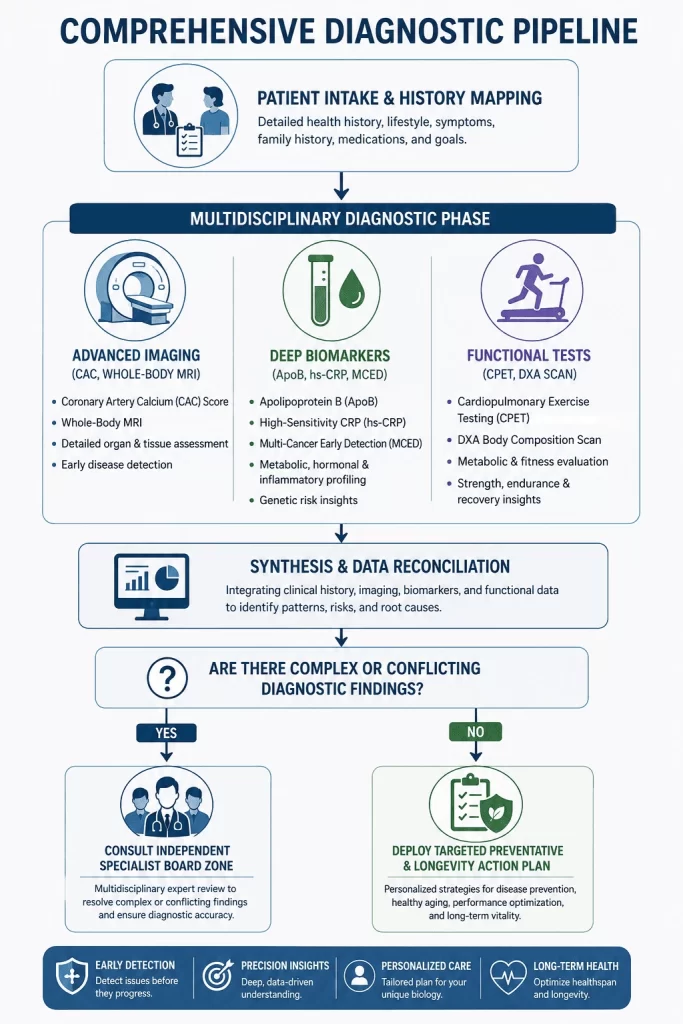
Advanced medical evaluations look much deeper. Instead of testing basic cholesterol alone, they measure specific lipid fractions like Apolipoprotein B (ApoB) and Lipoprotein(a), which provide a significantly more accurate picture of your actual heart disease risk. These panels also evaluate markers of system-wide inflammation, such as high-sensitivity C-reactive protein (hs-CRP), alongside detailed hormonal arrays and advanced metabolic metrics like fasting insulin and HbA1c to find early signs of insulin resistance.
Advanced Radiology: Catching Asymptomatic Structural Issues Early
The primary goal of proactive imaging is to find early signs of disease before any physical symptoms emerge. A comprehensive evaluation avoids basic X-rays in favor of highly advanced imaging technologies:
Coronary Artery Calcium (CAC) Scan: A specialized, low-dose CT scan of the heart that measures calcified plaque buildup inside your coronary arteries, functioning as one of the best predictors of future cardiovascular events.
Whole-Body MRI Screening: Advanced, radiation-free scanning designed to find hidden structural issues, early-stage vascular aneurysms, or silent soft-tissue abnormalities long before they present physical symptoms.
Functional & Metabolic Profiling: Measuring True Physiological Age
True health means more than just being free of disease; it requires understanding how your vital organ systems perform under physical stress.
Cardiopulmonary and Fitness Baselines
Advanced assessments often feature a Cardiopulmonary Exercise Test (CPET). While wearing a specialized breathing mask on a treadmill or stationary bicycle, your oxygen consumption, carbon dioxide output, and continuous electrocardiogram (ECG) metrics are measured in real time. This evaluation determines your exact VO_2( max)—the global standard for measuring cardiovascular fitness and an incredibly powerful marker for predicting long-term health and lifespan.
Body Composition and Visceral Fat Metrics
Standard health screenings rely heavily on Body Mass Index (BMI), a simple weight-to-height ratio that often misclassifies healthy muscle mass as overweight and misses hidden metabolic issues. Advanced checkups replace BMI with a high-resolution Dual-Energy X-ray Absorptiometry (DXA) scan.
A DXA scan provides an exact percentage breakdown of your bone density, lean muscle mass, and fat distribution. Most importantly, it calculates your exact levels of visceral adipose tissue (VAT)—the dangerous, hidden inflammatory fat that wraps around your internal abdominal organs and directly drives cardiovascular disease and type 2 diabetes.
| Assessment Layer | Standard Annual Physical | Comprehensive Medical Evaluation | Preventative Health Value |
| Cardiovascular Risk | Basic blood pressure and standard total cholesterol panels. | Advanced ApoB, Lipoprotein(a) arrays, and a Coronary Artery Calcium (CAC) scan. | Finds hidden arterial plaque and calculates your true heart attack risk years in advance. |
| Metabolic Health | Fasting blood glucose tracking. | Fasting insulin tracking, HbA1c testing, and visceral fat (VAT) quantification via DXA. | Catches early-stage insulin resistance and metabolic dysfunction before blood sugar spikes. |
| Physical Performance | Checking basic reflexes and resting heart rate. | Full $VO_2\text{ max}$ testing and automated cardiopulmonary stress tracking (CPET). | Establishes a clear fitness baseline to optimize cardiorespiratory health and long-term lifespan. |
Proactive Personalization: Integrating Genomics and Early Cancer Detection
The absolute highest tier of preventative medicine moves past matching lifestyle tips to your age group, tailoring care plans to your exact genetic blueprint.
By embedding advanced Precision Medicine UAE screening systems into your comprehensive health day, specialists can run high-resolution genomic panels. This screens your DNA for inherited genetic variations linked to cardiovascular risks, metabolic tendencies, and hereditary cancer syndromes.
Furthermore, these evaluations can include next-generation Multi-Cancer Early Detection (MCED) liquid biopsies. These revolutionary blood tests analyze tiny fragments of circulating DNA to screen for the hidden molecular signs of over 50 different types of cancer simultaneously—frequently catching small localized tumors long before they would ever show up on a standard physical exam.
Who Needs a Full Diagnostic Assessment? Symptoms vs. Longevity Strategy
Comprehensive evaluations are incredibly valuable for two distinct groups of individuals:
The Optimization and Preventative Group: High-performing professionals, executives, and individuals who feel healthy but want to maximize their healthspan. They use these assessments to find hidden risks, optimize their energy levels, and design data-driven lifestyle and longevity plans.
The Unresolved Diagnostic Group: Patients dealing with complex, vague, or overlapping symptoms—such as chronic fatigue, brain fog, or digestive issues—who have seen multiple doctors without getting a clear answer.
If your evaluation reveals complex or conflicting medical findings across different specialties, requesting a formal Second Medical Opinion UAE connects your comprehensive data files with an independent, multi-disciplinary review panel. This step resolves conflicting data points and ensures your final preventative plan is completely aligned before you start any treatment.
Preparing for Your Evaluation: How to Get the Most Out of Your Diagnostic Day
Because an advanced clinical evaluation involves an extensive series of diagnostic tests, proper preparation is essential to ensure your biomarkers return completely accurate data:
Follow Fasting Requirements: You will typically need to fast (no food or drinks except plain water) for 10 to 12 hours before your morning blood draw to ensure your baseline glucose, insulin, and lipid metrics are entirely stable.
Avoid Intense Workouts: Do not engage in heavy weightlifting or exhaustive endurance exercise for 48 hours before your appointment, as intense training can artificially elevate liver enzymes, muscle inflammation markers, and kidney metrics.
Organize Your Complete Medical Records: Bring a complete list of your current medications, over-the-counter supplements, and any past surgical records or family history files, giving your team the context they need to interpret your findings accurately.
Data-Driven Longevity: Taking Complete Control of Your Health Trajectory
Your health is your most valuable asset, and waiting for physical symptoms to appear before taking action is a reactive approach to medicine. A comprehensive medical assessment replaces guesswork with deep data, giving you a clear, honest look inside your body.
Whether your evaluation confirms that your organ systems are performing perfectly or catches an early, hidden risk factor that requires a proactive shift in care, you gain invaluable knowledge. Investing in an advanced health audit empowers you to stop reacting to illness and start actively directing your long-term vitality and healthspan with total clinical confidence.