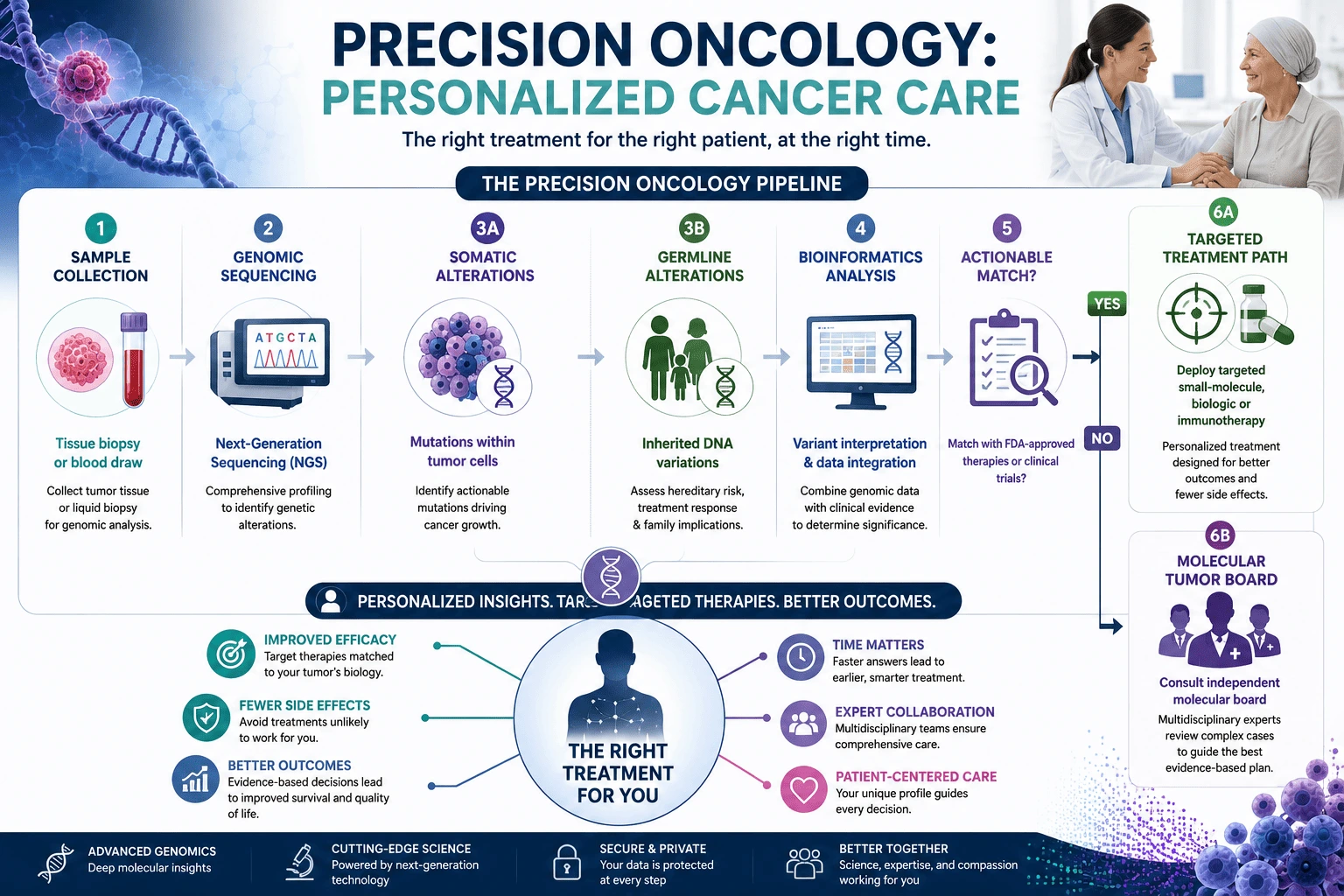
For decades, cancer treatment followed a rigid, predictable template. If two patients were diagnosed with lung cancer, they received the exact same regimen of chemotherapy and radiation. If the treatment failed, doctors had few options other than moving to another broad-spectrum, toxic chemotherapy drug. This old approach viewed cancer entirely by its location in the body.
Today, medical science has moved past this anatomical framework. We now understand that cancer is fundamentally a disease of the genome—driven by specific genetic mutations that alter how cells grow and divide. Precision oncology abandons the traditional “one-size-fits-all” strategy. Instead, it uses advanced genomic testing to read a tumor’s unique DNA blueprint, allowing specialists to prescribe highly targeted therapies designed to destroy cancer cells while preserving healthy tissue.
Decoupling the Code: How Genomic Tumor Profiling Works
To design a truly personalized treatment plan, specialists must first map out the exact genetic alterations causing a tumor to behave abnormally. This process is called genomic tumor profiling.
Somatic vs. Germline: Mapping the Blueprint of the Tumor
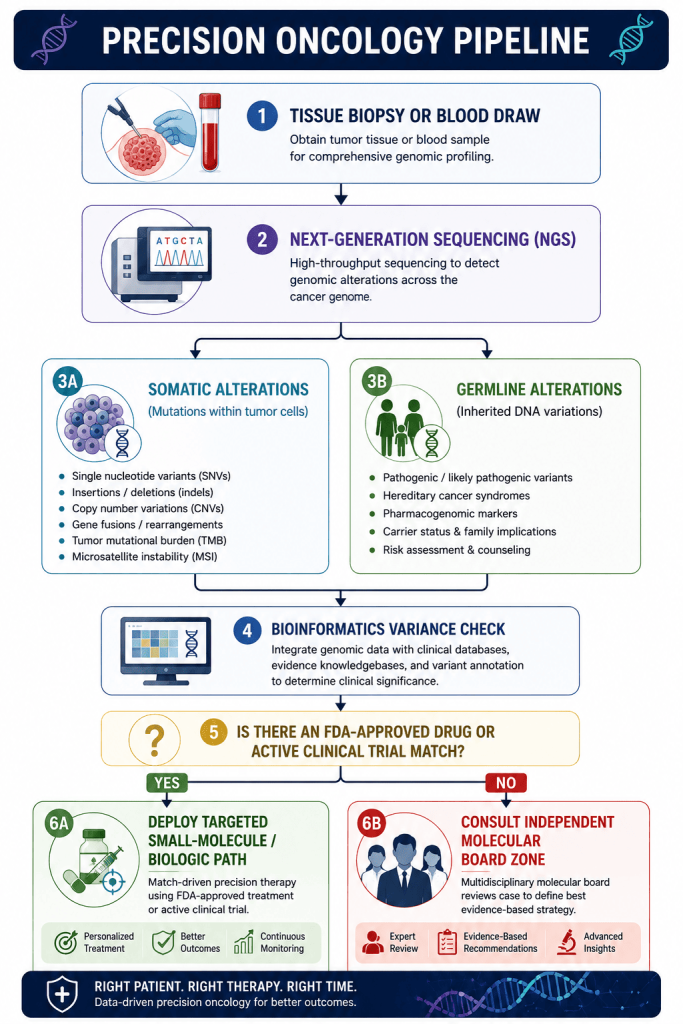
It is critical to understand the distinction between the two types of genetic variants found during testing:
Germline Mutations: These are inherited genetic variations passed down from your parents, present in every single cell of your body (such as the BRCA1 or BRCA2 genes linked to breast and ovarian cancers).
Somatic Mutations: These are non-inherited, acquired genetic errors that develop over time inside a single cell due to environmental factors or cellular aging. These mutations are found only within the tumor cells themselves.
By integrating comprehensive Precision Medicine UAE screening profiles into your care plan, pathologists can run detailed somatic sequencing panels. This isolates the exact driver mutations turning a normal cell into a malignant tumor.
Next-Generation Sequencing (NGS): Reading Millions of DNA Strands
The core technology driving personalized cancer care is Next-Generation Sequencing (NGS). Unlike older, slower testing methods that could only analyze one gene at a time, NGS screens hundreds of cancer-related genes simultaneously from a single tissue sample. Within days, this high-throughput technology uncovers complex structural alterations—including gene amplifications, deletions, and fusions—giving your oncology team an exhaustive list of your tumor’s vulnerabilities.
Targeted Therapies vs. Traditional Chemotherapy: A Paradigm Shift
The fundamental difference between old-school cancer treatments and precision oncology lies in their mechanism of action
Cellular Precision: Shutting Down the Driver Mutations
Traditional chemotherapy works by attacking all rapidly dividing cells in the body. Because it cannot distinguish between malignant tumor cells and healthy fast-growing cells, it causes systemic side effects like hair loss, immune suppression, and severe gastrointestinal distress.
Targeted therapies, on the other hand, act like smart, guided medications. They are engineered to bind specifically to the unique abnormal proteins produced by mutated oncogenes (cancer-driving genes). For example, if NGS reveals that a lung tumor is driven by an ALK gene rearrangement, doctors can bypass systemic chemotherapy completely and prescribe an oral tyrosine kinase inhibitor (TKI). This drug acts like a key in a lock, shutting down the specific chemical signals telling the cancer cells to multiply while leaving surrounding healthy tissues unharmed
| Diagnostic Marker | Traditional Oncology Protocol | Precision Oncology Strategy | Clinical Outcome Shift |
| ALK / EGFR Mutation (Lung) | Broad systemic platinum-doublet chemotherapy infusions. | Oral Small-Molecule Tyrosine Kinase Inhibitors (TKIs). | Higher response rates with significantly fewer toxic systemic side effects. |
| NTRK Gene Fusion (Any Organ) | Standard surgical resection followed by radiation. | Tissue-Agnostic TRK Inhibitors (e.g., Larotrectinib). | High tumor shrinkage rates regardless of where the cancer originated. |
| MSI-High / High TMB (Colorectal) | Standard fluorouracil-based cytotoxic chemotherapy. | Anti-PD-1 Immune Checkpoint Inhibitors (Immunotherapy). | Unlocks the patient’s own T-cells to naturally recognize and eliminate tumor cells. |
Tissue-Agnostic Therapies: Treating the Mutation, Not the Organ
One of the most revolutionary advances in modern oncology is the development of tissue-agnostic drugs. Historically, treatments were strictly approved for specific body sites, like “breast cancer” or “prostate cancer.”
Today, precision medicine has shifted focus toward the underlying genetic error, regardless of where the tumor started. If genomic testing reveals an NTRK gene fusion, a patient can receive an FDA-approved TRK inhibitor whether their tumor is in the thyroid, the lung, the colon, or soft tissue. The genetic mutation determines the treatment, completely redefining how therapies are matched to patients.
The Power of Liquid Biopsies: Tracking Cancer in a Single Drop of Blood
Securing a physical tissue sample via a standard surgical biopsy can sometimes be difficult or risky, especially if a tumor is located deep inside the lungs, liver, or bone. Furthermore, tumors evolve over time, developing new mutations to resist treatments—meaning an old biopsy sample may no longer accurately reflect the cancer’s current genetic makeup.
Enter the liquid biopsy. As cancer cells grow and die, they shed tiny fragments of their mutated DNA directly into your bloodstream. This is known as circulating tumor DNA (ctDNA). A liquid biopsy isolates these floating fragments from a simple, non-invasive blood draw. This allows your oncology team to:
Discover targetable mutations safely without requiring invasive surgeries.
Monitor how well your treatment is working in real time.
Detect an emerging cancer recurrence or treatment resistance months before a physical tumor becomes visible on a traditional CT or PET scan.
Navigating the Genomic Maze: The Critical Role of Molecular Tumor Boards
A comprehensive genomic profile can return an immense amount of data, often revealing multiple complex mutations simultaneously. Sorting through this data to choose the absolute best combination of medications requires specialized, advanced expertise.
To solve this challenge, leading medical networks use a molecular tumor board. This specialized group moves beyond standard tumor review panels by bringing together geneticists, bioinformaticians, clinical molecular pathologists, and targeted therapy specialists. Together, they review your raw genetic files, evaluate any conflicting mutations, and cross-reference global clinical trial registries to build an optimized, evidence-based care strategy.
For patients seeking reassurance that their genomic data is being interpreted correctly, requesting an independent Second Medical Opinion UAE connects your local medical files with world-class international experts. This ensures your personalized treatment plan is verified by a top-tier panel before you begin your therapy.
Accessing the Future: Steps to Secure Your Genomic Profile
If you or a loved one are facing a complex, rare, or advanced cancer diagnosis, you should actively advocate to include genomic testing in your care plan. Use this step-by-step approach to navigate the process:
Request Next-Generation Sequencing Early: Ask your oncologist for a comprehensive genomic profile (CGP) or next-generation sequencing (NGS) panel before starting standard chemotherapy, as prior treatments can sometimes alter your tumor’s baseline molecular signals.
Verify Tissue Preservation: Ensure that the surgical center where your biopsy was performed preserves enough raw tissue in their paraffin blocks to run an extensive genetic sequencing panel.
Inquire About Liquid Biopsy Alternatives: If the tumor is surgically inaccessible, ask if a blood-based ctDNA liquid biopsy is an option to map your actionable mutations.
Confirm Clinical Trial Screenings: Request that your genetic data be uploaded into international registries to check if you qualify for active clinical trials testing next-generation targeted drugs.
Data-Driven Hope: The Future of Your Treatment Plan
Precision oncology has turned what were once terminal, treatment-resistant diagnoses into highly manageable conditions. By shifting the focus of cancer care from broad, systemic destruction to precise, molecular-level targeting, personalized care delivers significantly better outcomes while maintaining a much higher quality of life.
Every tumor carries its own hidden code. Unlocking that code through genomic sequencing removes the guesswork from your treatment plan, ensuring your oncology team fights your cancer with data, absolute precision, and custom-tailored confidence.