How Genetics Influence Treatment Decisions: The Science of Precision Prescribing
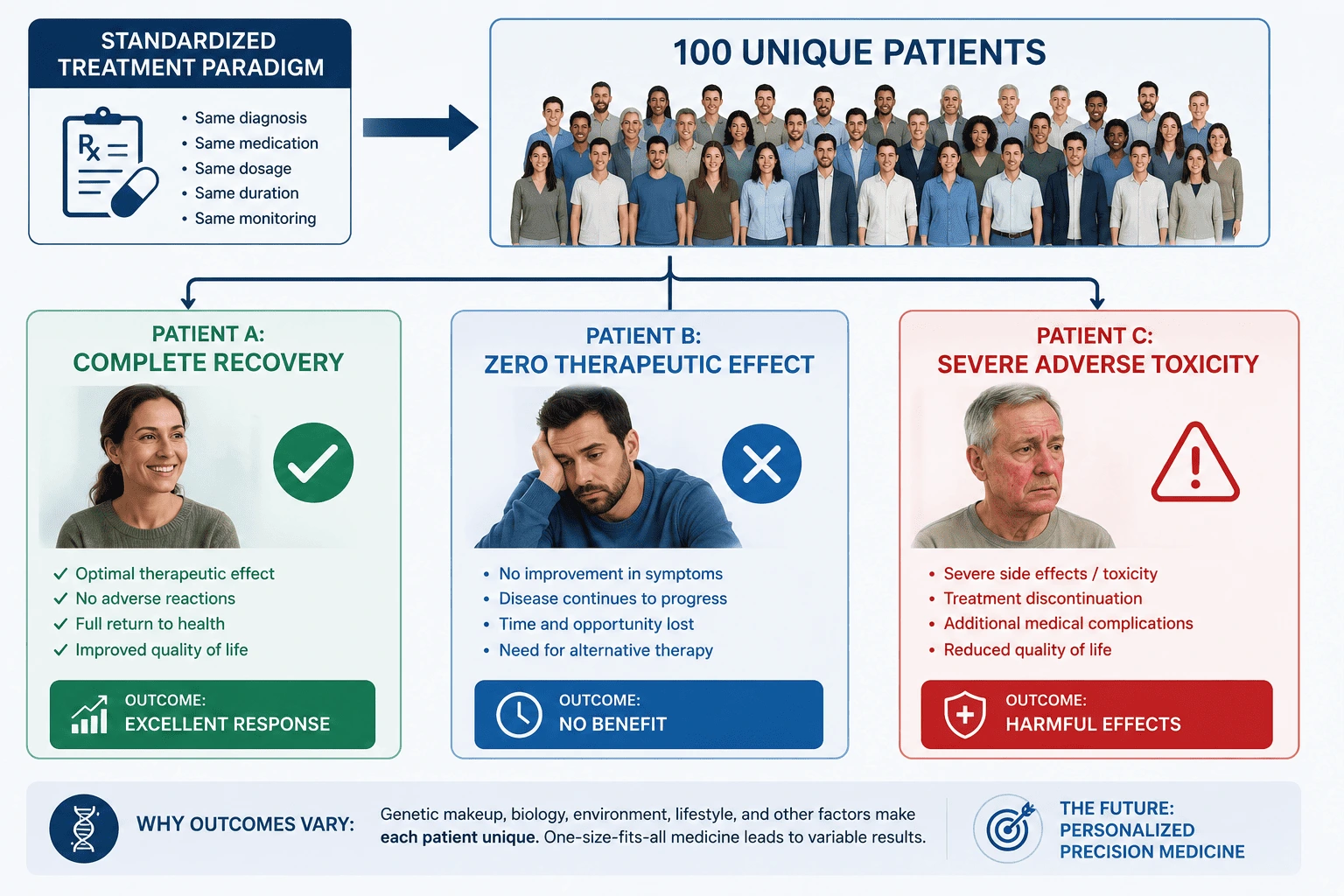
For over a century, modern pharmacology has operated under a standardized, population-wide assumption: if a hundred patients present with the same clinical diagnosis, they should all theoretically receive the same medication at the identical standardized dose. This “one-size-fits-all” approach treats the human species as a homogenous group of biological duplicates.
Yet, clinical reality paints a radically different and often dangerous picture. Every year, millions of individuals experience severe, life-altering side effects from properly prescribed medications, while millions of others derive absolutely zero therapeutic benefit from the exact same pills.
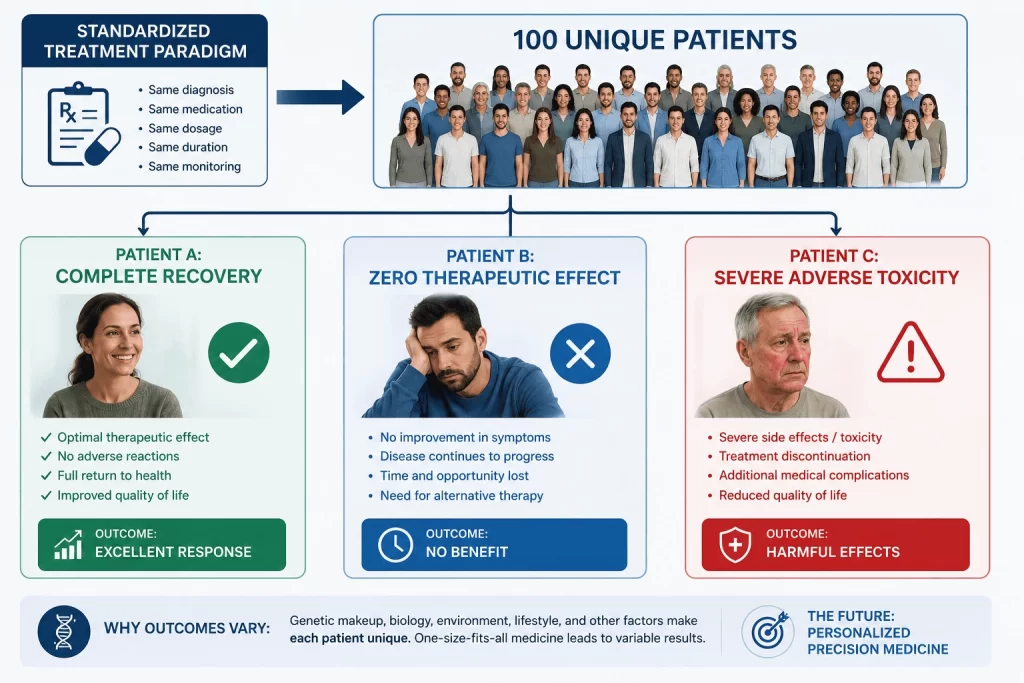
The missing link in this medical equation does not lie in a flawed diagnosis, but rather in our hidden, highly individualized molecular architecture. The way your body responds to a foreign chemical compound is overwhelmingly dictated by your inherited DNA. Understanding exactly how genetics influence treatment decisions is no longer a futuristic luxury; it is a foundational shift that is fundamentally reshaping safety and efficacy across global healthcare.
The Core Science: Understanding Pharmacogenomics (PGx)
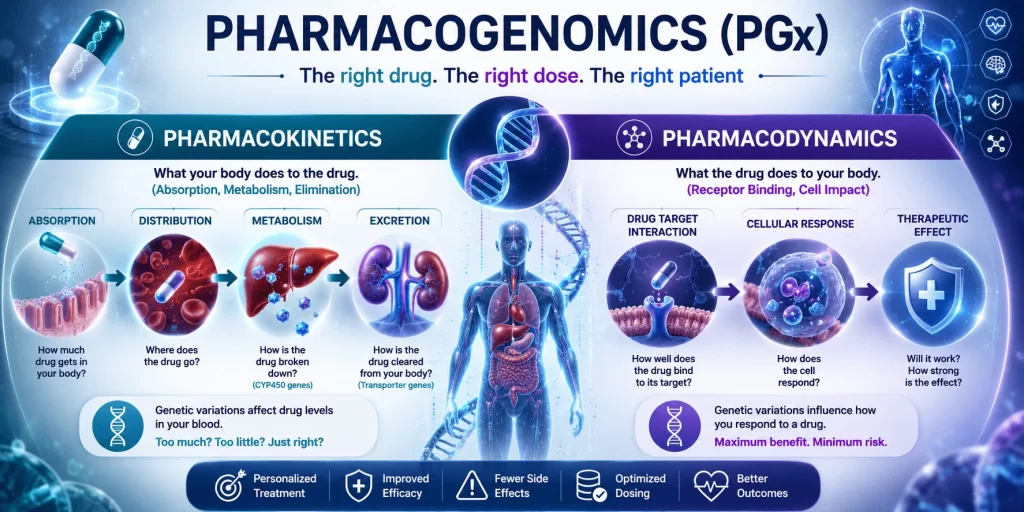
- Pharmacokinetics is colloquially defined as what your body does to the drug. It covers the entire journey of a medication: how it is absorbed into the bloodstream, distributed across tissues, metabolized by internal organs, and ultimately eliminated via clearance pathways. Genetic variations can alter the shape and quantity of cellular transporter proteins, leaving a drug stranded in the wrong tissue or allowing it to pool in the bloodstream at highly toxic levels.
- Pharmacodynamics is defined as what the drug does to your body. Most pharmaceuticals operate by latching onto specific protein structures on cellular surfaces, known as receptors. If a hereditary mutation alters the structural alignment or abundance of these receptors, a standard drug may find itself completely unable to bind to its target, rendering the therapy useless regardless of how high a dose is administered.
The Cytochrome P450 System: Your Liver’s Genetic Gatekeeper
When you swallow a medication, your body immediately treats it as a foreign substance that must be broken down and processed. The heavy lifting of this chemical deconstruction takes place in the liver, driven by a highly specialized superfamily of enzymes known as the Cytochrome P450 (CYP) system. These microscopic proteins are responsible for metabolizing roughly 70% to 80% of all current clinical medications.
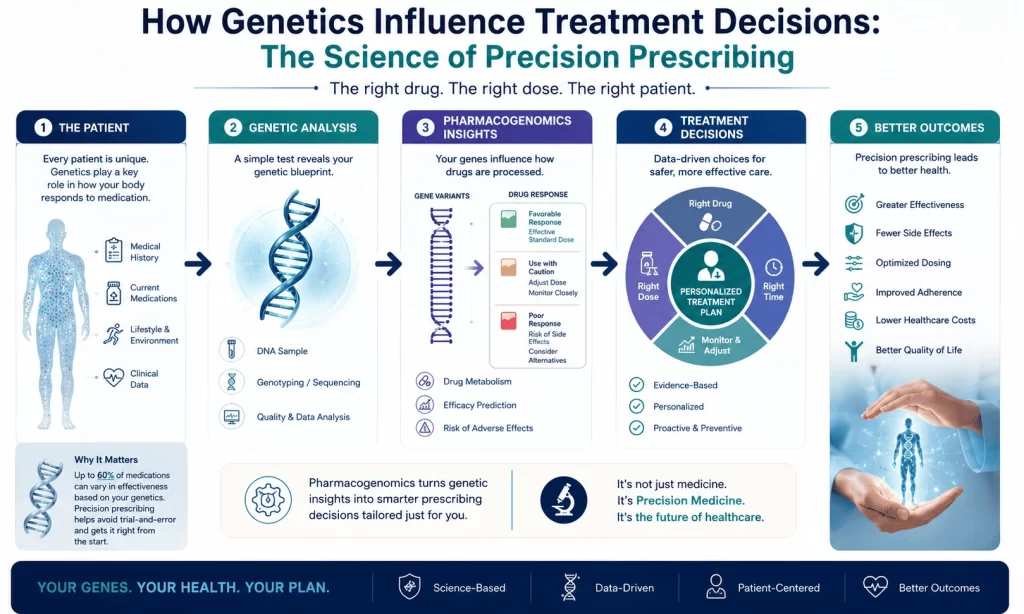
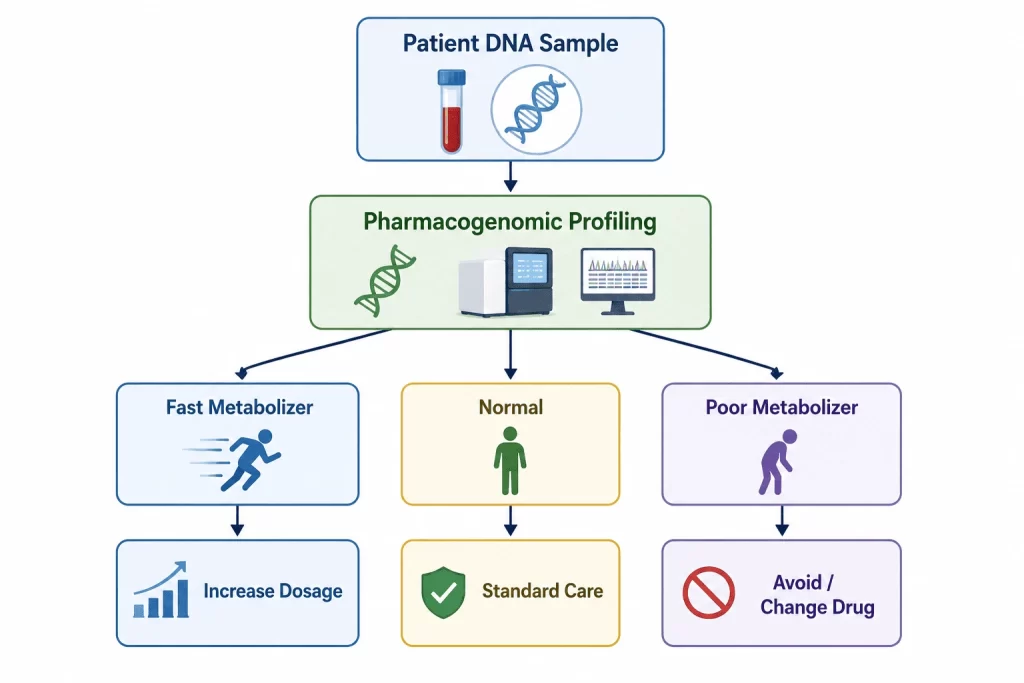
Because the structural templates for these liver enzymes are written directly into our inherited genetic code, variations in your DNA fundamentally dictate how fast or slow your liver processes specific chemicals. Based on upfront genomic testing, an individual’s metabolic capacity for any given gene pathway is categorized into one of four distinct functional phenotypes:
1. Poor Metabolizers (PM)
Individuals in this category possess genetic variants that cause their liver enzymes to have near-zero functional activity. When given a standard, off-the-shelf dose of a normal drug, their bodies are completely unable to clear it from the system. The drug slowly accumulates in the bloodstream with every subsequent dose, rapidly crossing the threshold into severe clinical toxicity and causing intense adverse drug reactions.
2. Intermediate Metabolizers (IM)
These patients carry a mixture of normal and mutated alleles, resulting in a significantly decreased or sluggish clearance capacity. While they do not experience immediate, acute toxicity, they often require carefully down-regulated, customized dosing schedules to avoid gradual physical drug accumulation over extended periods.
3. Normal / Extensive Metabolizers (NM)
This phenotype represents the traditional baseline wild-type population. Their bodies process, utilize, and eliminate the pharmaceutical compound at the exact standard rate anticipated by standard pharmaceutical manufacturers during clinical trial design.
4. Ultra-Rapid Metabolizers (UM)
On the opposite end of the spectrum, ultra-rapid metabolizers possess genetic duplications that cause their liver enzymes to work at an incredibly accelerated, hyperactive speed. Their systems break down and clear medications almost immediately upon ingestion. As a result, the drug is destroyed and eliminated before it ever has a chance to reach a therapeutic concentration in the bloodstream, leading to complete treatment failure.
Real-World Case Studies: When Genes Dictate Drug Choice
To see the real-world power of pharmacogenomics, we can look at several major clinical areas where a patient’s specific genetic code directly dictates whether a drug will heal them or harm them.
Cardiovascular Care: Clopidogrel and Warfarin
Clopidogrel is an antiplatelet medication commonly prescribed to stroke and heart attack survivors to prevent dangerous subsequent blood clots. However, clopidogrel is an inactive prodrug—it must first be processed and turned into its active form by the liver enzyme CYP2C19 to function. If an individual is a genetic Poor Metabolizer for CYP2C19, their body cannot activate the medication. Taking the pill provides absolutely no anti-clotting protection, leaving them at a massive, unmitigated risk for a secondary cardiovascular event.
Similarly, the blood thinner Warfarin features a incredibly narrow therapeutic window. Variations in the VKORC1 and CYP2C9 genes dictate exactly how sensitive a patient will be to its blood-thinning effects. Striking the wrong balance can lead to catastrophic internal bleeding or failed clot prevention, making upfront genetic mapping an indispensable safety step.
Pain Management: The Codeine Paradox
Codeine is a frequently prescribed opioid analgesic used to manage moderate to severe pain. To actually relieve pain, codeine must be converted into active morphine within the liver by the CYP2D6 enzyme.
If a patient is an Ultra-Rapid Metabolizer for CYP2D6, their body converts codeine into morphine at a dangerously accelerated, overwhelming speed. Even a normal, standard pediatric or adult dose can cause a sudden, massive spike of morphine in the blood, introducing an acute risk of fatal respiratory depression. Conversely, a Poor Metabolizer receives zero pain relief from codeine, often leading to them being unfairly labeled as drug-seeking when the true culprit is simply an uncooperative gene.
Oncology: Targeted Destruction via Tumor Genetics
Nowhere is the integration of genetic profiling more life-saving than in modern cancer care. Oncology utilizes two distinct types of genomic data: germline testing (the patient’s inherited DNA) and somatic testing (the specific mutations found inside the tumor itself).
For example, breast cancers that show a significant genetic over-expression of the HER2 receptor respond remarkably well to targeted therapies like T-DM1 or trastuzumab, which specifically track down and destroy those malignant cells. If a tumor is genetically HER2-negative, these advanced medications are completely ineffective, allowing oncologists to immediately pivot to alternative therapeutic pathways without wasting precious time.
Eliminating the Clinical Trial-and-Error Phase
The traditional method of prescribing medications for chronic conditions—particularly in fields like mental health, cardiology, and gastroenterology—has long been a slow process of clinical trial and error. A patient presenting with major clinical depression, for instance, is typically started on a standard first-line antidepressant. They must then wait four to six painful weeks to evaluate whether the drug offers therapeutic relief or causes unmanageable, debilitating side effects. If it fails, the cycle resets with a different class of medication, prolonging emotional and physical suffering.
Upfront genomic profiling completely rewrites this difficult journey. By mapping a patient’s unique metabolic capabilities before a single prescription is written, clinicians can immediately bypass medications doomed to fail or cause harm. This targeted approach dramatically accelerates the path to clinical recovery, slashes healthcare costs by preventing unnecessary medical visits, and eliminates the profound frustration of experimental prescribing.
The Intersectional Future: Combining Baselines with Genomic Mapping
While genetic variations provide an incredibly detailed structural map of your biological potential, genes do not operate in a vacuum. A patient’s actual response to treatment is also shaped by their age, body mass index, concurrent prescriptions, organ function, and daily lifestyle choices.
This is why advanced genomic data delivers the highest clinical value when it is deeply integrated into an extensive, multi-system overview like a proactive Medical Assessments UAE. By pairing your precise inherited pharmacogenomic profile with deep structural imaging, detailed metabolic blood biomarkers, and comprehensive physical data, healthcare teams can construct a truly accurate, multi-dimensional view of your current well-being. This creates a highly practical baseline that ensures every single preventative choice, lifestyle shift, and clinical therapy matches your exact physical state.
Navigating Complex and Ineffective Treatment Paths
Discovering that a long-term treatment plan isn’t working, or facing a sudden and confusing new diagnosis, can leave patients feeling incredibly overwhelmed. When standard therapies fail to deliver expected results, it is often a strong sign that hidden genetic variations or unmapped biological mechanisms are quietly working behind the scenes.
During these critical turning points, continuing down an unverified medical path can carry significant risks. To regain complete control and establish absolute certainty, proactive individuals often seek a comprehensive Second Medical Opinion UAE. This step brings in a dedicated panel of independent global experts to carefully review your entire diagnostic file, re-evaluate your treatment history, and ensure your therapeutic strategy is completely accurate.
This rigorous secondary review serves as the perfect bridge into the realm of advanced Precision Medicine UAE. By moving completely away from generic, mass-market protocols, precision care combines advanced genomic sequencing with real-time biomarker adjustments. This allows your medical team to design a hyper-targeted, cellular care plan tailored precisely to your unique biology, completely transforming your health journey.