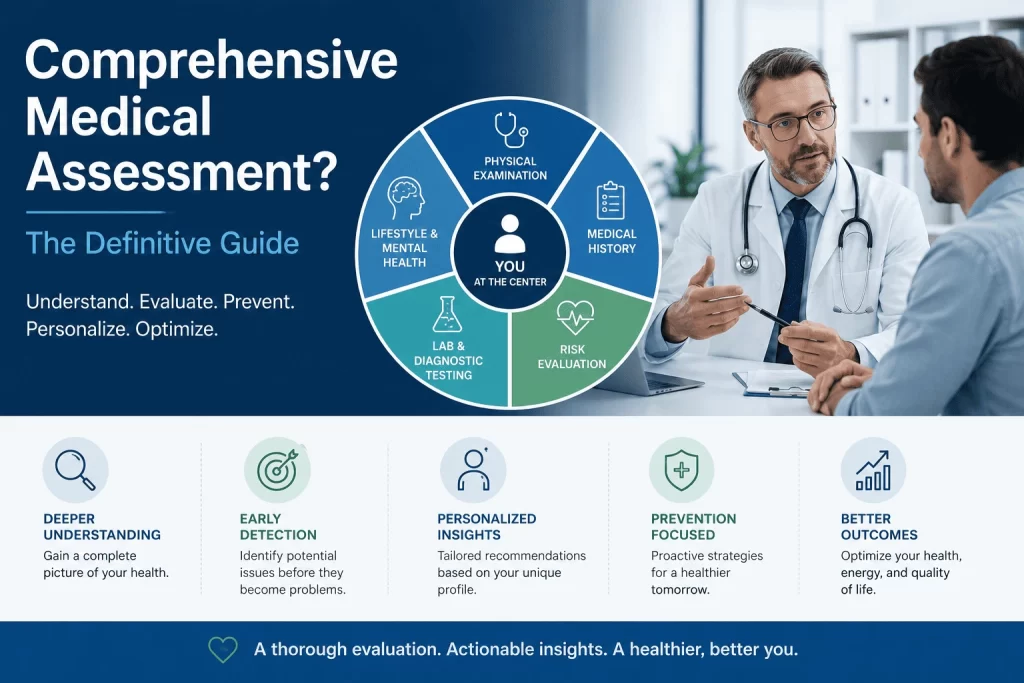
What Is a Comprehensive Medical Assessment? The Definitive Guide
We live in a culture that frequently equates the absence of visible illness with the presence of optimal health. Most people only interact with a physician when something goes distinctly wrong—a lingering pain, an unexpected drop in energy, or a sudden, acute health scare. This reactive approach treats the human body like a vehicle that is only brought into the shop after the engine has completely failed.
However, major health conditions such as cardiovascular disease, metabolic syndrome, and early-stage cellular mutations do not develop overnight. They develop silently, progressing through extended, invisible phases where everything feels perfectly normal on the outside while subtle damage builds up at a cellular level.
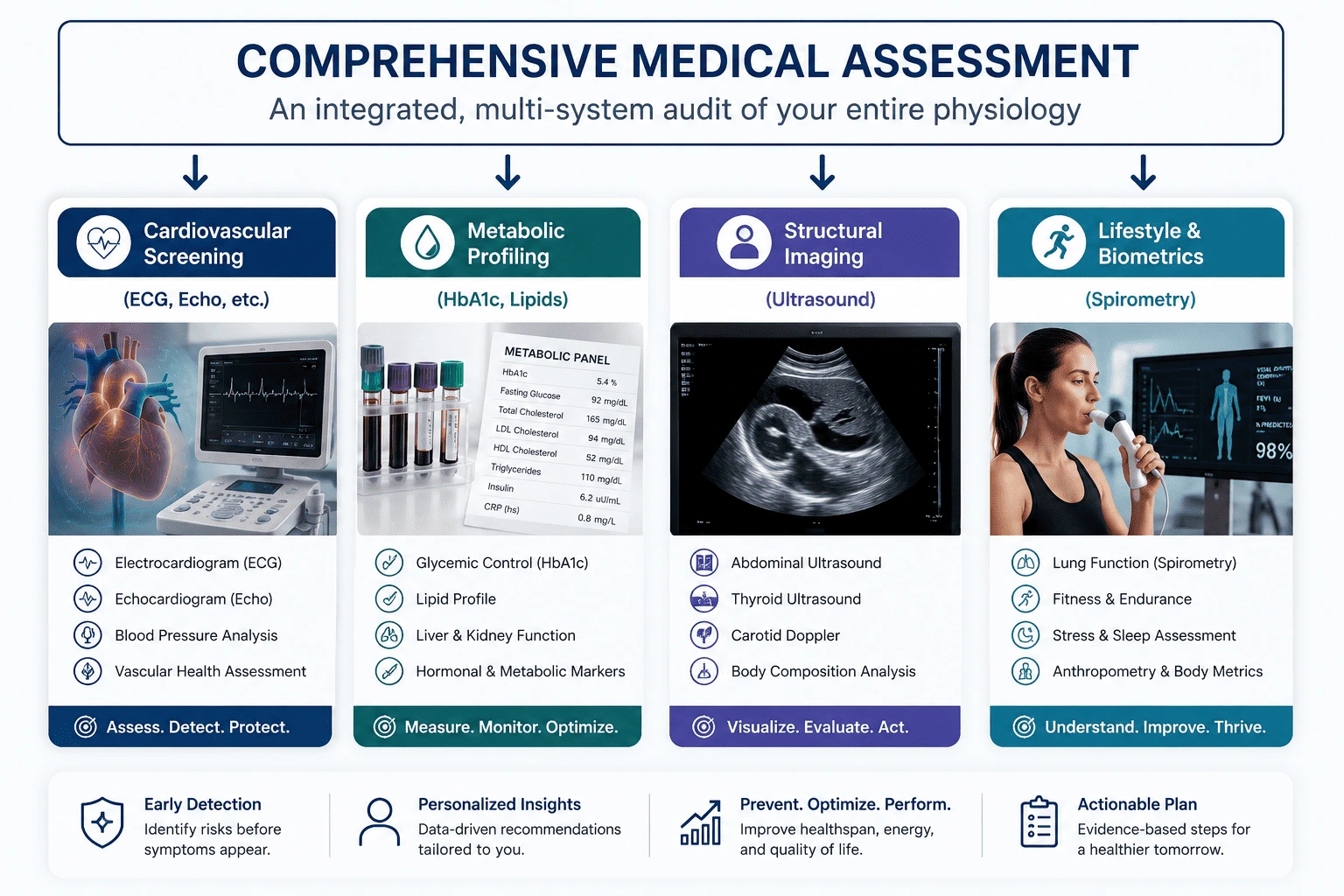
To break out of this reactive loop, forward-thinking individuals use a more advanced approach: the comprehensive medical assessment. Far from being a basic annual physical, this deep evaluation is a meticulous, data-dense review of your entire biological framework, designed to establish a precise clinical baseline and uncover hidden health risks before they impact your life.
Redefining Preventive Care: What a Comprehensive Assessment Truly Entails
A comprehensive medical assessment is an advanced diagnostic evaluation that goes deep into an individual’s current physiological state, lifestyle risks, and genetic predispositions. While a standard doctor’s visit focuses on checking off basic metrics or treating an immediate symptom, a comprehensive assessment acts as a full-scale forensic audit of your health.
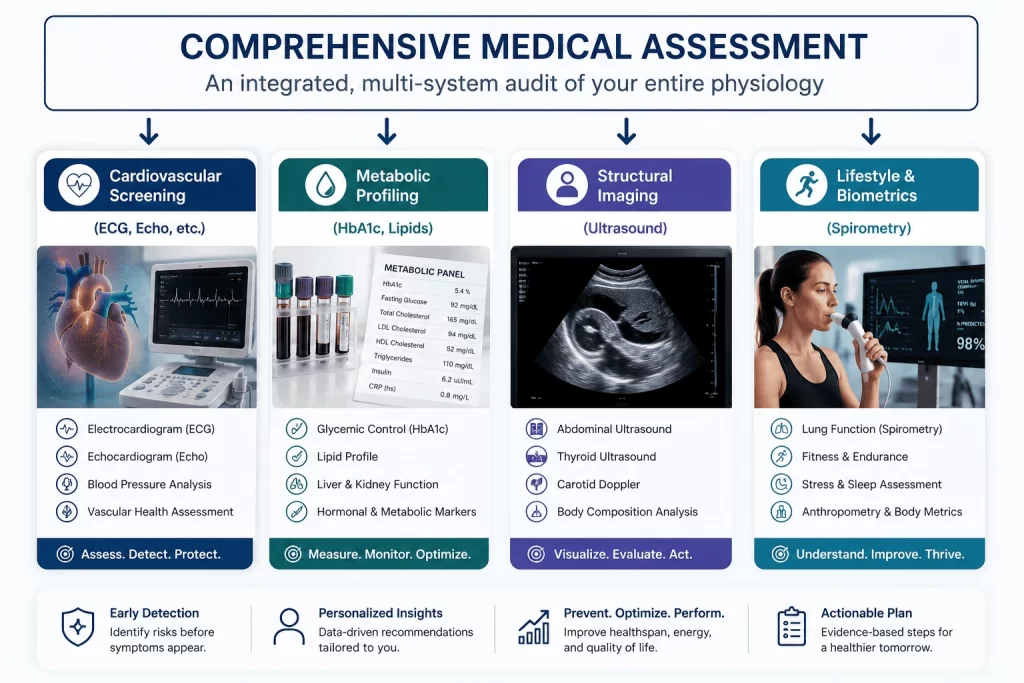
This structural deep dive brings together multiple medical fields—including preventative cardiology, internal medicine, endocrinology, and advanced radiology—into a single unified strategy. The ultimate objective is two-fold: to create an unshakeable health baseline that tracks how your body changes over time, and to provide detailed risk stratification that tells you exactly what health conditions you might face in the future.
Standard Checkup vs. Comprehensive Medical Assessment: The Structural Differences
To truly understand the value of this deep evaluation, it helps to look at how it compares to a traditional annual doctor’s checkup.
A basic physical exam typically lasts about fifteen to twenty minutes. It generally includes a quick blood pressure check, a brief listen to your heart and lungs, and a standard blood panel that looks at total cholesterol and fasting glucose. While this is helpful for spotting obvious health issues, it simply lacks the diagnostic depth needed to catch subtle, early changes in your health.
In contrast, a formal, structured Medical Assessments UAE is a comprehensive half-day or full-day clinical experience. It moves beyond generic health targets to look closely at your unique biology. Instead of just testing whether your blood sugar is currently normal, an advanced evaluation looks at your long-term insulin sensitivity, multi-system inflammatory markers, respiratory efficiency, and organ structure.
The Core Components of an Advanced Health Evaluation
A truly comprehensive health assessment uses a wide array of advanced diagnostic tests to build an incredibly accurate picture of your internal health.
1. Deep-Dive Biometrics and Extended Vital Monitoring
This step goes far beyond a basic height, weight, and blood pressure reading. It incorporates advanced body composition analysis to map out your exact ratios of visceral fat, skeletal muscle mass, and intracellular hydration. It also includes resting metabolic measurements and detailed vascular health checks to evaluate the elasticity of your arteries.
2. Advanced Cardiovascular and Respiratory Screenings
Cardiovascular issues remain a top global health concern, and catching them early is life-saving. An advanced evaluation uses resting and stress electrocardiograms (ECG) alongside non-invasive echocardiography to look directly at the structural walls, valves, and pumping efficiency of your heart. This is paired with spirometry testing to measure your total lung volume and airflow speed, which uncovers early signs of respiratory decline.
3. Full Metabolic, Endocrine, and Biomarker Profiling
The blood analysis used in a comprehensive evaluation is remarkably extensive. It tests for sub-clinical cardiovascular inflammation using high-sensitivity C-reactive protein (hs-CRP) assays, maps out your exact thyroid and metabolic hormone pathways, measures key nutrient levels, and runs deep advanced lipid tests that count individual apolipoprotein B (ApoB) particles—a far more accurate predictor of arterial plaque buildup than simple total cholesterol numbers.
4. Specialized Diagnostic Imaging and Structural Scans
Advanced imaging provides a non-invasive way to look directly inside your body. Depending on your age, family history, and risk factors, a comprehensive evaluation may include high-resolution ultrasounds of the carotid arteries to check for early plaque buildup, abdominal scans to assess vital organs like the liver and kidneys, and low-dose CT screenings to check lung and cardiovascular health.
The Proactive Value: Catching Sub-Clinical Issues Before Symptoms Appear
The true power of an extensive medical evaluation lies in its ability to shine a light on what doctors call the asymptomatic phase of disease. Many chronic conditions—such as type 2 diabetes, fatty liver disease, and arterial plaque accumulation—can quietly develop inside your body for a decade or more without causing a single outward symptom.
By the time a patient actually experiences shortness of breath, chest discomfort, or extreme fatigue, the underlying disease has already progressed significantly. A comprehensive medical assessment is specifically designed to catch these issues when they are still sub-clinical. Finding an elevated inflammatory marker or a slight arterial thickening early allows you to make precise, highly effective adjustments to your lifestyle, nutrition, and medical plan, reversing the course of the disease before it ever becomes a serious crisis.
The Corporate and Executive Landscape: Protecting Leadership Longevity
In the modern corporate world, an organization’s ultimate success is deeply tied to the cognitive clarity, resilience, and physical energy of its leadership team. High-level executives handle intense, fast-paced workloads and chronic travel schedules that create unique physical stressors.
This reality has made data-dense health screenings a core pillar of corporate wellness strategies. A dedicated executive health overrun ensures that leadership teams protect their vitality, avoid sudden health crises, and optimize their cognitive performance. Investing in comprehensive health evaluations is a powerful strategy that shifts corporate medicine from basic reactive care to proactive, long-term longevity management.
Transitioning from Data to Strategy: The Gateway to Personalized Medicine
Gathering highly detailed biological data is incredibly valuable, but the data itself is only the first step. The true magic happens when that data is translated into an actionable, highly personalized health optimization strategy.
If your comprehensive screening reveals an unusual biomarker pattern or an unexpected structural variation on a scan, your next step should never be based on guesswork. To ensure complete peace of mind, your results can easily be shared through a formal Second Medical Opinion UAE. This connects your complete diagnostic file with leading global experts who can review the findings, confirm the initial observations, and make sure your next steps are completely optimized.
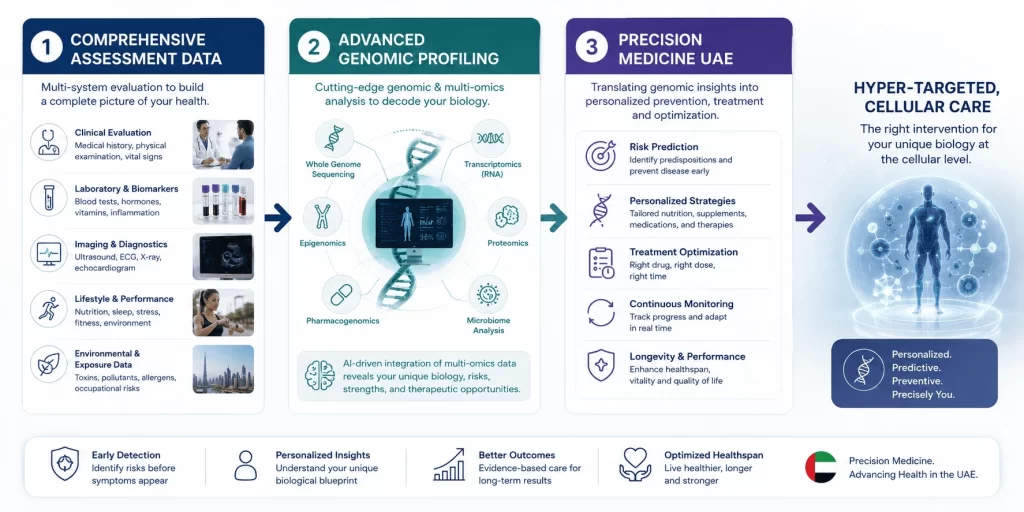
Ultimately, an advanced physiological baseline acts as the perfect foundation for entering the world of Precision Medicine UAE. By pairing your physical test data with cutting-edge genomic sequencing and deep molecular tracking, doctors move past generic health guidelines. This allows them to build a hyper-individualized care plan tailored perfectly to your unique DNA and cellular blueprint, paving the way for a long, vibrant, and incredibly healthy life.